Oxford Castle & Prison
Oxford Castle & Prison
Jake Davies
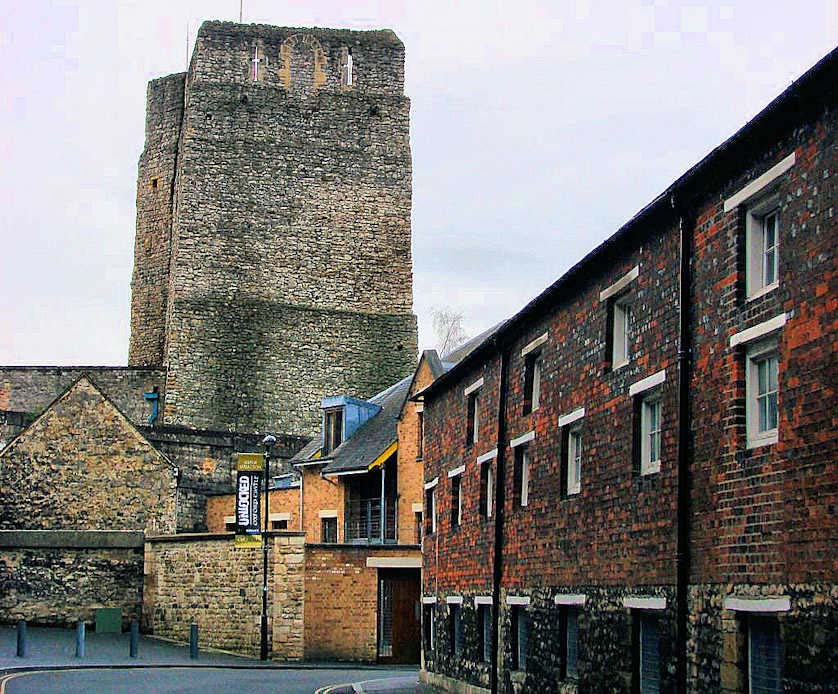
The historic city of Oxford is known primarily for its university colleges, but is also home to the remains of a little known Norman castle.

History
Oxford Castle was built between 1071 to 1073 by baron Robert D'Oyly, a friend of William the Conqueror. The castle was built on the west side of the Saxon town that had offered resistance to the Norman invasion.
The castle is believed to have been of motte and bailey design, a motte being a mound with a tower or keep on top of it, and a bailey being a courtyard below the motte with palisades and buildings.
The original castle was constructed of wood so only the motte remains, topped with two iconic trees. A tributary of the River Thames, now called Castle Mill Stream was utilized to make a moat.
Probably at the end of the twelfth or early thirteenth centuries the original wooden structures were replaced with stone and parts of the original stone defenses of the Saxon town were incorporated into the castle.
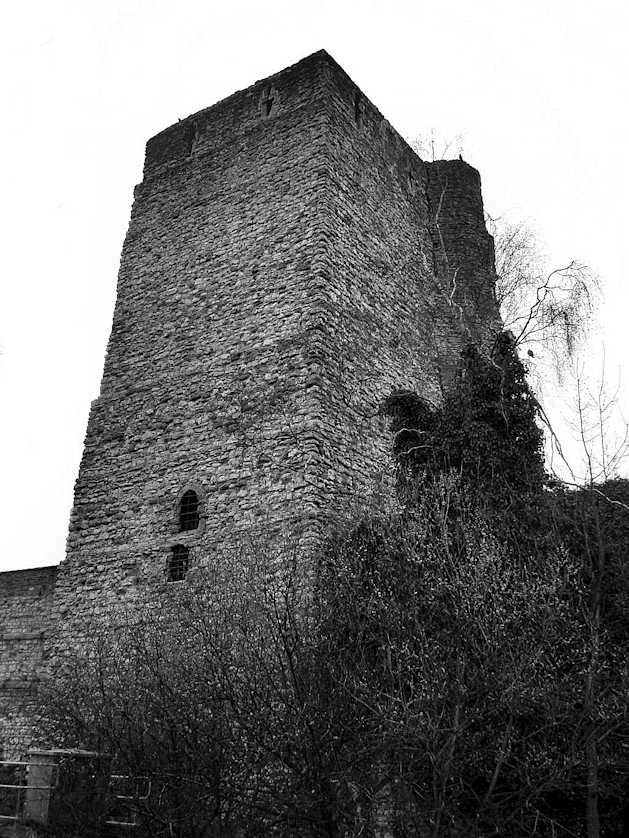
St. George's Tower, the most prominent structure of the castle now is believed to have been a watchtower at the western gate of the old town.
Sieges
The castle was besieged by King Stephen in 1140 in what is known as The Anarchy. Empress Matilda, a rival for the throne, was in the castle but escaped.
The castle was besieged again during the Barons War of 1215-1217, and it was this that led to the wooden structures being replaced with stone. In 1235 the Round Tower, which still stands, was built.
Prison
In the 14th century the castle fell into disrepair and was converted into a prison and remained as such until the English Civil War of 1642 when the royalists made Oxford their capital and held the castle until defeated by the parliamentary forces. The castle was modified extensively and after the war was returned to its role as a prison.
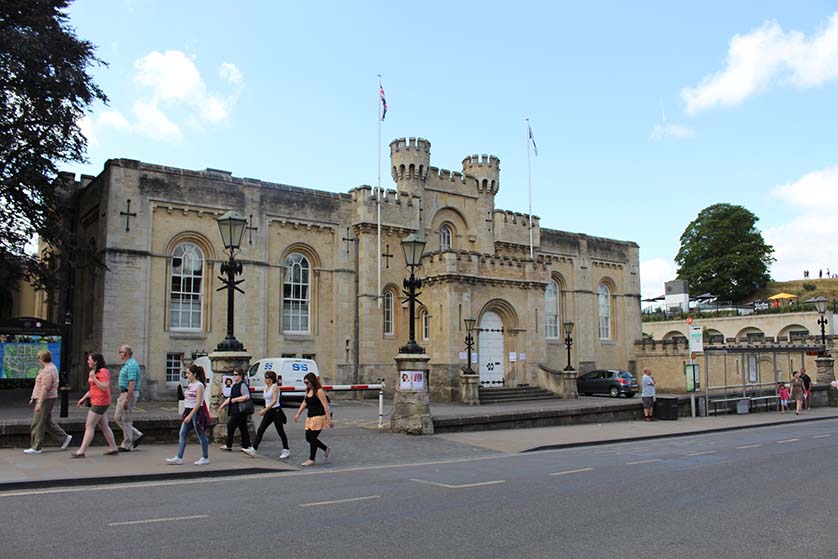
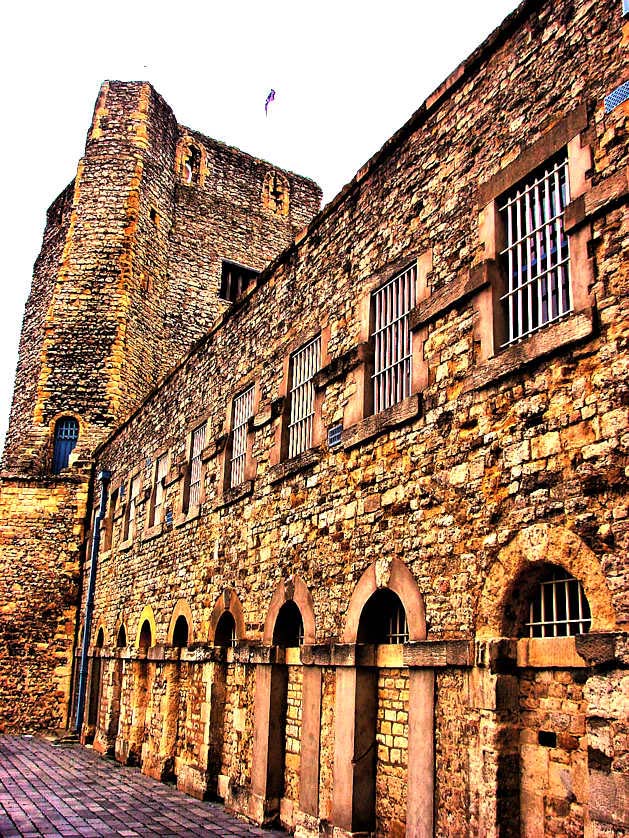
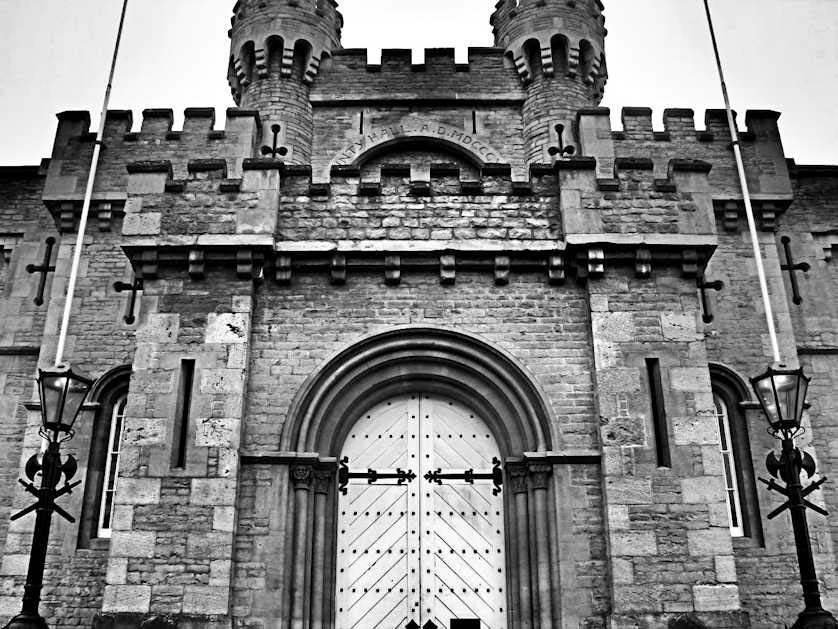
Between 1785 and 1805 the prison was completely renovated by architect William Blackburn, believed to be the best prison architect of his time. In 1876 the prison expanded again to occupy all the castle grounds and it remained a prison until 1996.
The castle and prison are now open to the public, though only by booking a guided tour. St. George's Tower can be climbed to get great views over the city, and you also go underground to a crypt.
Several wings of the former prison are visited, some seen as they were when used and some with exhibits on the history. Knowledgeable costumed guides lead the tours, and advance booking is suggested though at times not necessary. The price is 12.95 GBP for adults.
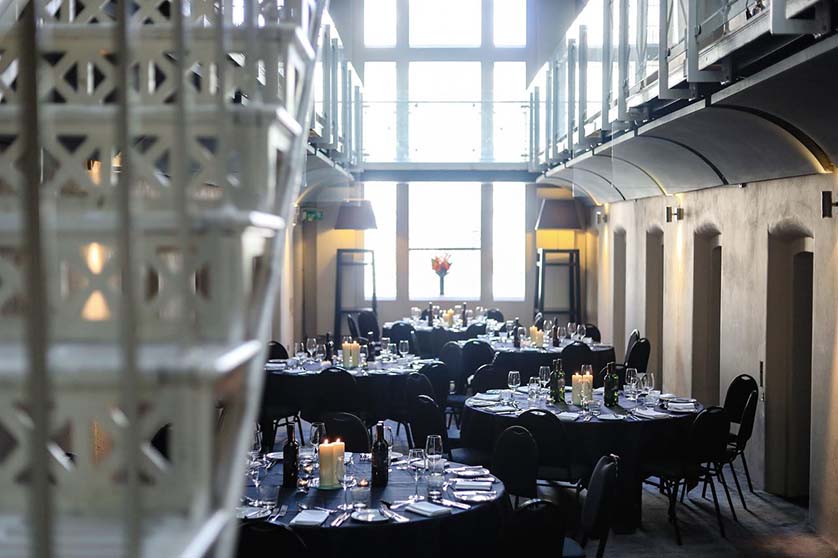
One part of the former prison has been converted into a luxury four-star, boutique hotel, Malmaison Oxford.
Access & Hours
44-46 Oxford Castle, Oxford OX1 1AY
Tel: 01865 260666
Open 10 am to 4.30 pm every day.
Carfax Tower is a short walk away.

Access - Getting to Oxford
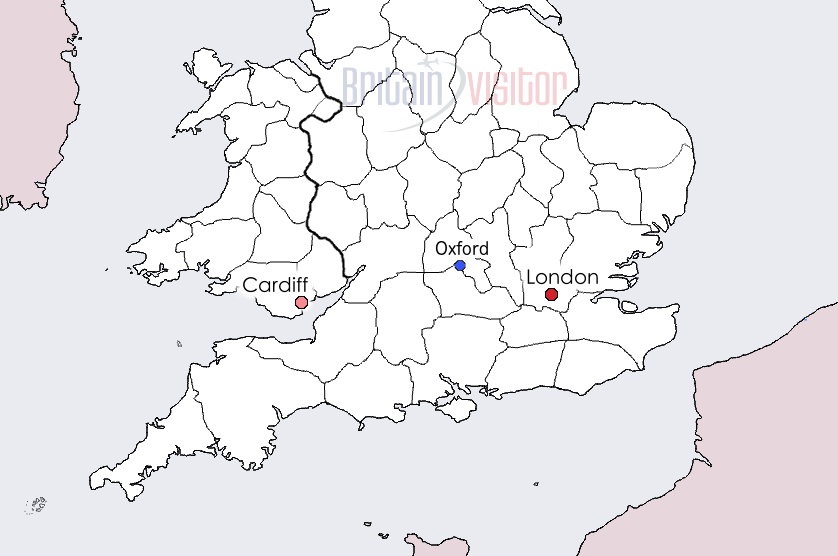
Oxford is served by London Oxford Airport, in nearby Kidlington, though it has very few flights to other destinations at present.
Oxford has 5 park and ride sites with bus links to the city centre: Pear Tree (bus 300), Redbridge (bus 300), Seacourt (bus 400), Thornhill (bus 400) and Water Eaton (bus 500).
There is frequent coach service between Oxford and London, including the X90, which is operated by the Oxford Bus Company. The Oxford Bus Company also runs services to Heathrow and Gatwick airports. The bus station at Gloucester Green is used mainly by the London and airport buses. National Express coaches and other long-distance buses including route X5 to Milton Keynes and Cambridge also use the station.
Oxford railway station is about 1 km west of the city centre. The station is served by many routes, including CrossCountry services to places as far away as Manchester and Edinburgh. First Great Western operates the station and offers services to London Paddington as well as other destinations such as Worcester.
The Oxford Ring Road surrounds the city centre and close suburbs. The main roads to and from Oxford are the A34 - which connects the North and Midlands to the port of Southampton, the A40, the A44 – which begins in Oxford and extends past Evesham to Worcester, Hereford and Aberystwyth, the A420 – which also begins in Oxford and leads to Bristol by way of Swindon and Chippenham. Oxford is also served by the M40 motorway, which connects London to Birmingham. The M40 comes no closer than 16 km away from the city centre, but it meets the A34 to the north of Oxford.
Blenheim Palace is located just off the A44 in Woodstock, Oxfordshire.
Accommodation
Oxford is close enough to London to make a day trip easy enough, especially if your hotel is close to Paddington Station. However, if you do stay in Oxford, the city has a range of accommodation to suit all budgets.
See a list of hotels in Oxford.
Oxford Related
Map
Hotels in the UK
Book Hotels in England - Booking.com
Find Accommodation in London - Booking.com
Search Hotels in Scotland - Booking.com
Hotels in Northern Ireland - Booking.com