Lord Leycester Hospital, Warwick, England
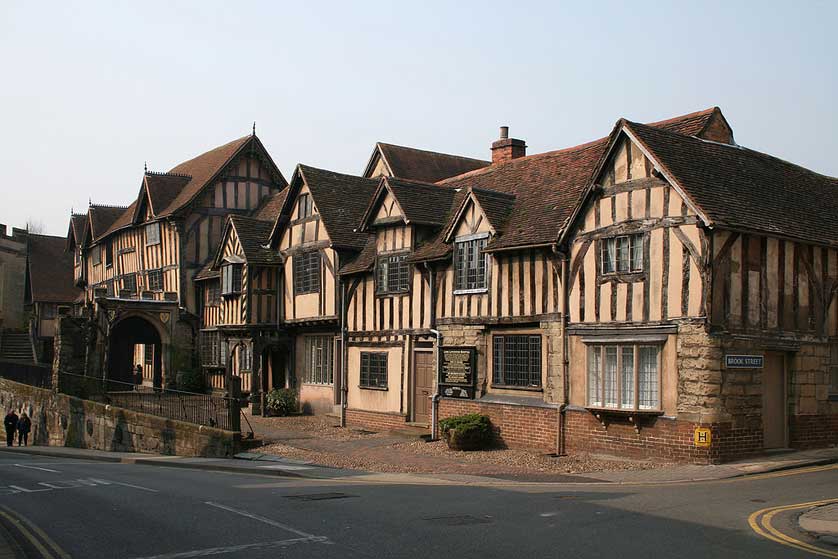
Lord Leycester Hospital in Warwick in the English Midlands near Coventry is a Grade I listed Medieval building.
The building is now a charity that lends support to ex-military staff and their families.
"The Brethren," as they are known, are housed in flats on the property and act as its guides dressed in ceremonial uniform. They still meet daily in the chapel.
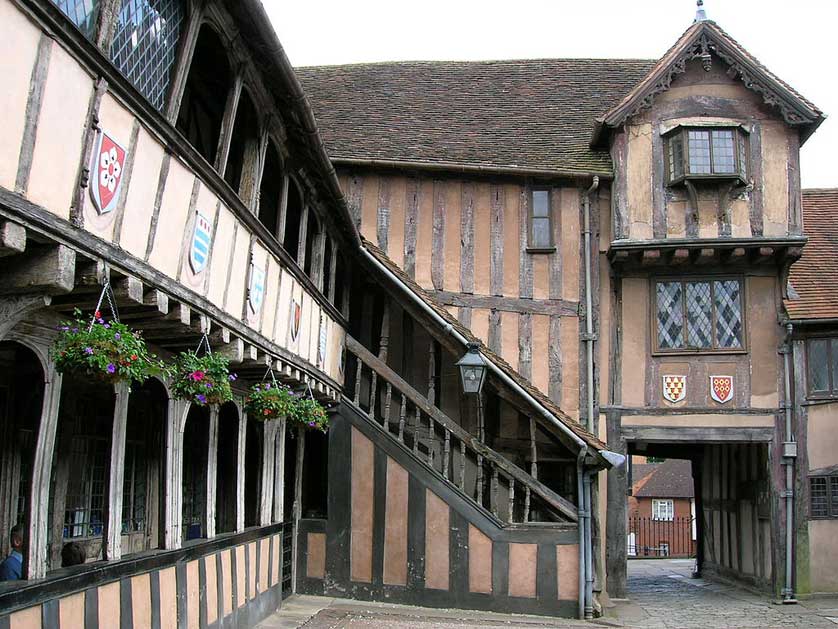
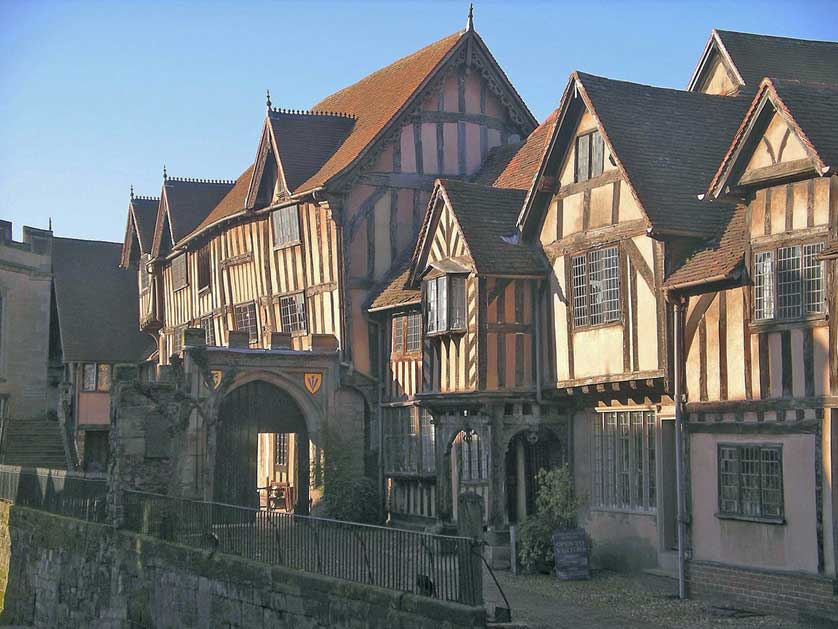
The architecture of Lord Leycester Hospital is a blend of medieval and Tudor styles. The buildings feature picturesque timber-framed structures, beautiful gardens, and a tranquil courtyard. One of the highlights is the Guildhall, which dates back to the 14th century and serves as the main entrance to the hospital. The Great Hall, with its grand oak-panelled walls, is another remarkable feature that often serves as a venue for various events.
History
The building dates back to the 12th century though the buildings we can see today are from the 15th century. The complex consists of a chapel, a guildhall and accommodation for old or wounded soldiers and their spouses.
The chapel is the oldest part of the building and dates back originally to 1126. The famous Victorian architect Sir Gilbert Scott of Albert Memorial fame restored the church in 1860.
In the 14th century Neville "the Kingmaker" granted use of the chapel to the local town guilds.
The Great Hall, Guild Hall, and Master's House were added in the late 15th century. In 1546, King Henry VIII made the fateful decision to disband the United Guilds, a collective of influential organizations in Warwick. With this decree, the future of the guild buildings seemed bleak, as they could have easily fallen into the hands of the crown. However, Thomas Oken, the Master of the United Guilds, foresaw the imminent dissolution and the potential loss of the guild's invaluable properties. With a keen sense of preservation, he took decisive action. Oken, a man of great vision, transferred the ownership of the guild property at Westgate to the Burgesses of Warwick.
The hospital was founded later in 1571 by Robert Dudley, the Earl of Leicester and one-time favorite of Queen Elizabeth I, as a place of residence for aged or injured soldiers who had served under him.
On display in the buildings is a collection of historic weaponry including an Italian executioner's sword and several swords used by Indian troops during the colonial period.
Fortunately the structure escaped the Great Fire of 1694 which destroyed hundreds of other wooden, Medieval buildings in the town.
The building once hosted the small Regimental Museum of The Queen's Own Hussars which will eventually be rehoused in Trinity Mews in Warwick.
The attractive Master's Garden contains an Egyptian urn thought to be 2,000 years old and used to measure the height of the River Nile. There is also a thatched summer house amid the lovely seasonal plants.
Information
Lord Leycester Hospital
60 High Street
Warwick
Warwickshire
CV34 4BH
Tel: 01926 491422
www: lordleycester.com
There is a cafe on site called the Brethren's Kitchen which serves Cream Teas and other refreshments.
Nearby Attractions
Warwick Castle is the major attraction for most visitors to the town.
It is a medieval castle that was built by William the Conqueror in 1068 AD. The huge fortress was built to overawe the defeated Saxons with a display of formidable Norman force and might.
Close to the castle is Thomas Oken's House. At the time that Warwick was granted its town charter in 1545, Thomas Oken was a mercer and master of a guild. Oken may have been the richest man in Warwick; he made his fortune dealing in wool and woven fabrics. He was much involved in the administration of Lord Leycester Hospital in his time.
Other places of interest in Warwick include the Warwickshire Museum (Market Hall Museum, St. John's House), and Warwick School believed to be the oldest school in the country dating from the 10th century. The school was for a time housed in the Lord Leycester Hospital. Mill Garden is one of the less well-known gems in this much visited town. It is a small, private garden with an amazing view of the River Avon and with the walls and towers of Warwick Castle looming over it.
Just outside Warwick is another castle, Kenilworth. Kenilworth Castle was founded in the 1120's by Geoffrey de Clinton, a rival to Roger de Beaumont at Warwick Castle.
Warwick Hotels
Warwick offers plenty of choice for hotels, B&B's and guest houses.
Some recommended places to stay are Castle Limes Hotel in a former 19th-century coaching inn, Warwick Arms Hotel and The Old Fourpenny Hotel on Crompton Street.
See a listing of all available hotels in Warwick.
Warwick Access - Getting To Warwick
By Rail: Warwick Station has trains to Birmingham Snow Hill Station in Birmingham and Stratford-upon-Avon. There are also trains to London Marylebone Station via Leamington Spa.
By Car: Driving from London to Warwick takes about 2 hours on the M40 motorway.
By Coach: National Express offers coach service to and from Warwick. There are local buses to Hatton Park, Stratford-upon-Avon, Leamington Spa, Kenilworth, Coventry, and the British Motor Museum.
Warwick Map

Hotels in the UK
Book Hotels in England - Booking.com
Find Accommodation in London - Booking.com
Search Hotels in Scotland - Booking.com
Hotels in Northern Ireland - Booking.com