Holy Trinity Church, Coventry
Holy Trinity Church, Coventry
Jake Davies
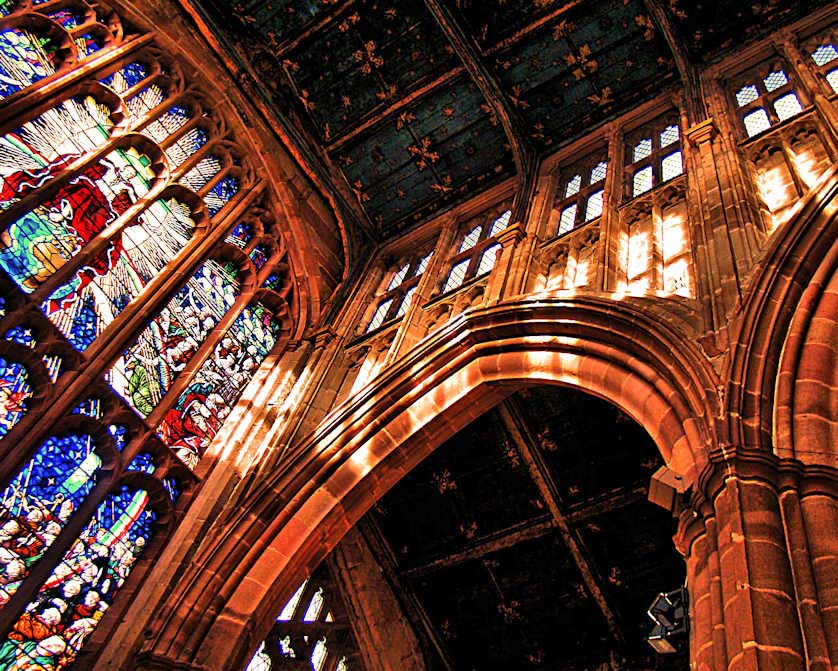
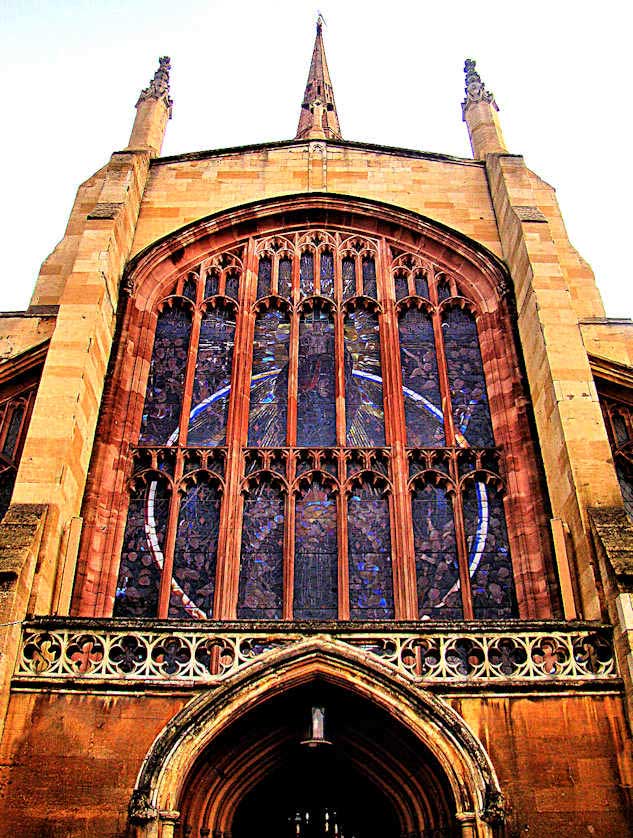
Holy Trinity Church in Coventry is one of the oldest and largest churches in the English Midlands and one of Coventry's so-called "Three Spires".
History
The church owes its origins to an ancient chapel built on this site connected to the priory that had been established next door by Leofric in the 12th century.
It is possible that some of this original chapel is still part of the current church which was constructed between the 12th and 14th centuries. The priory and its cathedral were destroyed in the 16th century, but excavated remains are now on display.
The church is large for not being a cathedral, and is 194 feet long. The spire is 236 feet high and was built in 1667, replacing the earlier spire which collapsed during a storm two years earlier.
Architecture
One thing that did not survive the war were most of the stained glass windows which had been blown out by the bomb blasts.
The new windows are however quite magnificent and colourful. The West Window is titled Te Deum, and is quite spectacular. It was designed by Hugh Ray Easton and installed in 1955.
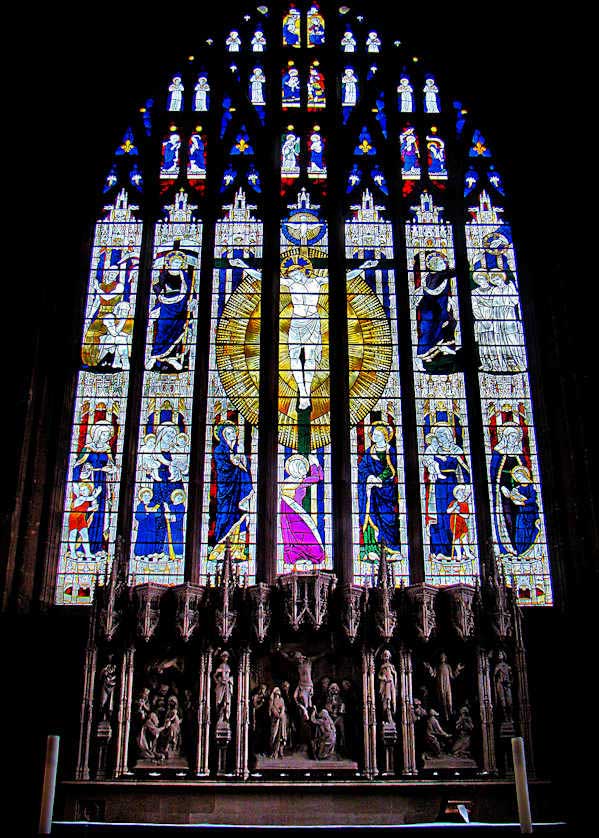
The great East Window is called the Bride's Window because in the post-war period those getting married in the church were asked to make a donation to the cost of the new window.
It was designed by Ninian Comper in 1956. There are several more, smaller windows including the "Christ in Majesty" window in the south aisle that actually dates back pre-war to 1933.
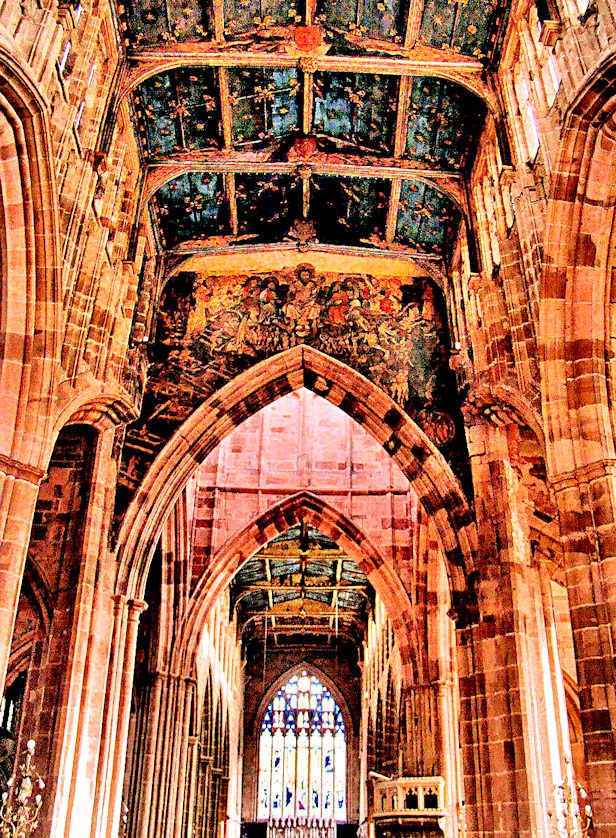
The most famous artwork in the church is what is known as the "Doom Painting", painted above the tower arch in the 1430's, about 50 years before Leonardo Da Vinci painted his famous Last Supper.
The painting depicts what is known as the Last Judgement with Christ flanked by his disciples judging the souls of the dead and includes scenes of Hell's Mouth and the Stairway to Heaven. This was a popular theme in the religious art of the time.
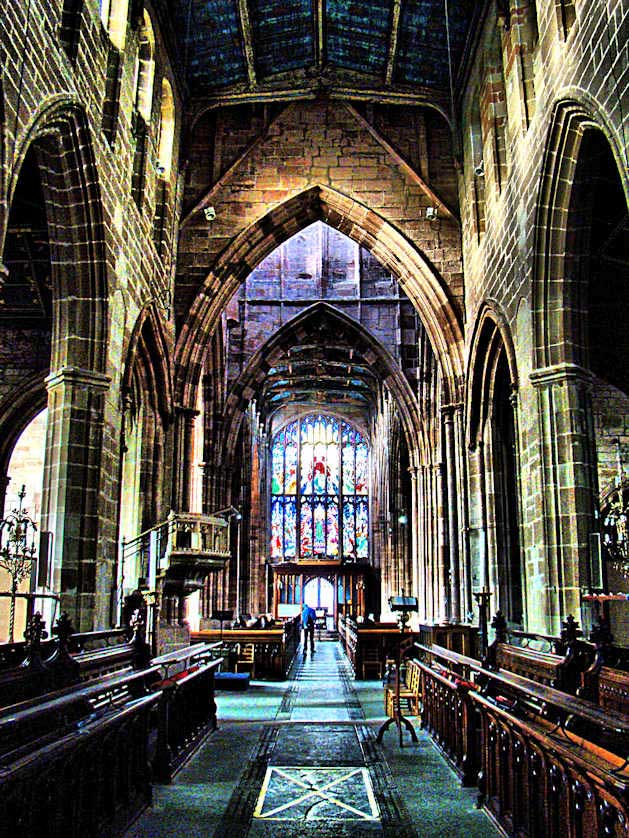

Doom Painting
About a century after its production the Doom Painting was covered over with a whitewash as a result of Henry VIII's policy of removing much of what he and his ministers considered frivolous art and decoration from churches.
The painting was discovered again in 1831 and carefully restored, but the varnish used darkened quickly and once again the painting disappeared from public view. Starting in 2002 the painting has been slowly restored and since 2004 has once again been visible.
Holy Trinity is surprisingly large and bright inside. As well as the Doom Painting and the stained glass there are plenty of other things to see and enjoy. Not as famous as the nearby Coventry Cathedrals, Holy Trinity is well worth a visit.


Information & Hours
Holy Trinity Church, Coventry
5a Priory Row
Coventry CV1 5EX
Access - Getting to Coventry
Coventry is close to the following motorways: M1, M6, M40 and M42.
Coventry Station has connections to London Euston and Birmingham New Street.
There are local train services to Nuneaton, Northampton and Leamington Spa. The museum is a 15-minute walk from the station.
Long distance National Express buses run nationwide from Pool Meadow bus station, which is also the hub for local buses.
Accommodation in the Midlands
There are places to stay to suit all budgets in both Birmingham and Coventry.
In Coventry the Ramada Hotel and Suites has four stars. The ibis Coventry Centre is a three-star property.
At the top end in Birmingham try the Clayton Hotel Birmingham or the Jurys Inn on Broad Street.
See a list of hotels in Coventry.
Map

Midlands Related
Birmingham Museum & Art Gallery
Compare prices and rent a car in Birmingham
Hotels in the UK
Book Hotels in England - Booking.com
Find Accommodation in London - Booking.com
Search Hotels in Scotland - Booking.com
Hotels in Northern Ireland - Booking.com