Culross Guide, Fife, Scotland
Fife's Culross

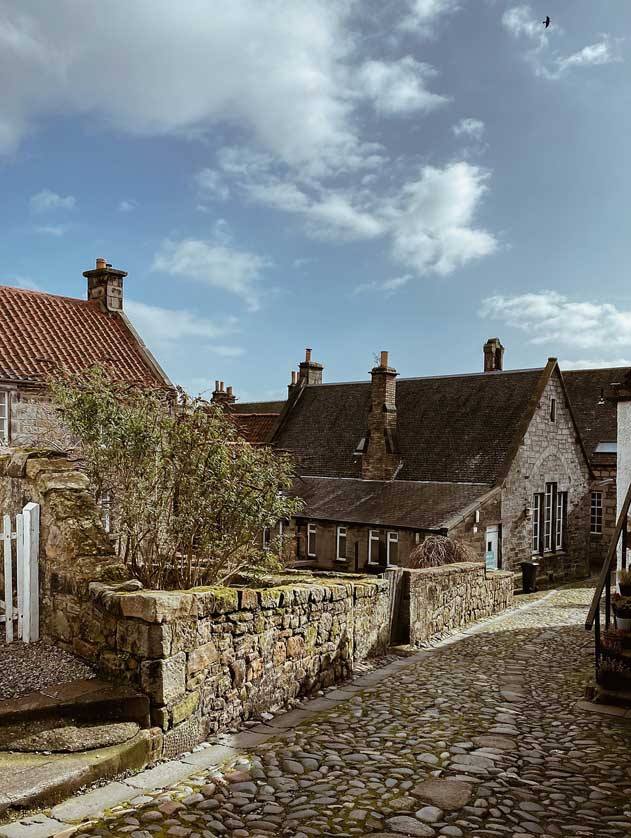
Nestled on the northern shores of the Firth of Forth, the village of Culross (pronounced 'Coo-riss') is one of Scotland's most enchanting villages.
This architectural jewel was once a royal burgh and now has a population of only around 400 people.
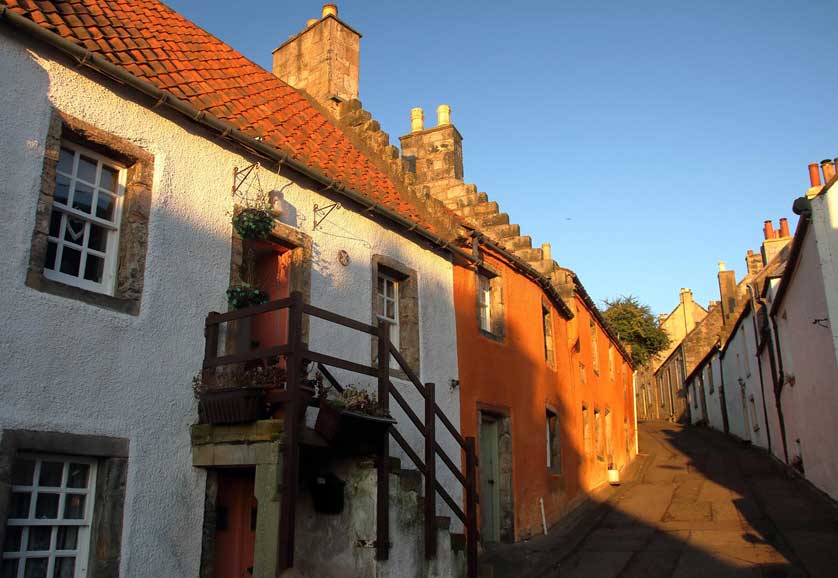
The village of 'harled' (roughcast plaster-covered) cottages is located about 80 km southeast of St Andrews, a similar distance west of Crail, Anstruther, Pittenweem, St Monans and the other villages of the East Neuk, 40 km northwest of Edinburgh, and about 90 km southwest of Dundee.

History
Founded in the 6th century and thriving during the 16th and 17th centuries as a centre of trade and industry - particularly salt panning and coal mining - Culross owes much of its preservation to historical obscurity - by the Victorian period it lay largely abandoned and forgotten.
There were once seven salt pans at Culross in the 16th century with the salt used both domestically and also exported.
It is said that St. Serf founded a monastery here and mentored St. Mungo, the patron saint of Glasgow. The town later prospered under the patronage of Sir George Bruce, an enterprising laird who built the world's first undersea coal mine (the Moat Pit). Today, Culross is maintained by the National Trust for Scotland and offers one of the most authentic glimpses into Scotland's past.

Attractions - Things to See & Do
Culross is a treasure trove for history lovers and fans of period dramas. The Culross Palace, a mustard-yellow 17th-century merchant's house, is the main attraction, featuring painted wooden ceilings and a tranquil period garden.
The Culross Town House and Mercat Cross lie at the heart of the cobbled village square, evoking images of bustling medieval markets. Just a short walk uphill takes you to the ruins of Culross Abbey, founded in the 13th century and set against panoramic views of the Firth. West of the abbey is the atmospheric West Kirk, once the village's parish church.
Fans of the TV series Outlander will recognize Culross as the filming location for the fictional village of Cranesmuir. Wandering the steep, narrow lanes lined with whitewashed cottages is like stepping onto a film set - or back in time. Other productions set in the village include Kidnapped (1971), The Little Vampire (2000), A Dying Breed (2007), and The 39 Steps (2008).
For walkers, the Fife Coastal Path runs through Culross and offers scenic views along the estuary. The Culross Pier is a peaceful spot for birdwatching or simply enjoying the view across the Firth.



Shopping
Visitors will find artisan boutiques and gift shops selling handmade crafts, local artwork, traditional Scottish gifts, and antiques. The Biscuit Café & Gift Shop is a popular stop, combining sweet treats with unique souvenirs.
Eat & Drink
Despite its small size, Culross offers a few excellent spots to recharge. Bessie's Café, nestled beside the Town House, is perfect for coffee and home baking. The Red Lion Inn is a traditional Scottish pub serving hearty meals and local ales, popular with both locals and visitors. For a more modern menu, the Culross Palace Café, operated by the National Trust, offers lunch options and a selection of Scottish cakes and teas, often using herbs and ingredients from the Palace's own gardens.
Access - Getting There
Culross is located in Fife, roughly 40 minutes from Edinburgh and an hour from Glasgow by car. Parking is available at the entrance to the village, which is best explored on foot due to its narrow lanes and cobbled streets.
Rail
While there is no train station in Culross itself, nearby Dunfermline or Alloa offer rail connections, with local buses and taxis completing the journey. For cyclists, the village is a scenic stop along the National Cycle Network.
There are trains from Edinburgh Waverley Station and Edinburgh Haymarket to Dunfermline City (formerly Dunfermline Town). Services from Haymarket take just over 30 minutes. From Dunfermline the 8 or 8A bus will take you to the village.
Alloa has trains to both Stirling and Glasgow.
The Caledonian Sleeper service runs from London Euston to Leuchars near St Andrews overnight six days a week, Sunday to Friday.
The Highland route runs between Fort William, Inverness or Aberdeen and London Euston. The Highland trains join at Edinburgh Waverley and continue to London. The Aberdeen to Edinburgh Waverley Highland train stops at Stonehaven, Montrose, Arbroath, Carnoustie, Dundee Station, Leuchars (for St Andrews), Kirkcaldy, Inverkeithing and Edinburgh Waverley.
It's worth renting a car if you are touring this part of Scotland along with the remote areas of the Loch Lomond & The Trossachs National Park.

Accommodation
Accommodation in Culross is mainly guest houses, holiday homes and rental apartments. Here are a few choices. The Dundonald Guesthouse & Cottage is housed in a historic building and provides a selection of breakfasts. Another recommended option is the 4-star holiday home Sandhaven.
The Saorsa House Culross offers a garden and terrace with free WiFi.
See a listing of places to stay in Culross.
Scotland Related
Cuisine in the Shetland Islands
Hermaness National Nature Reserve
Maps

Hotels in Scotland
Book Hotels in Edinburgh - Booking.com
Find Hotels in Glasgow - Booking.com
Search Hotels in Orkney - Booking.com
Hotels in The Shetlands - Booking.com