Cardiff Sightseeing
Beauty on the Bay: A rejuvenated Cardiff makes the perfect gateway to Wales
As one of Britain's most overlooked cities, Cardiff (Caerdydd) - the capital of Wales - is an attractive and vibrant destination filled with culture, green space, ever-humorous residents and a burgeoning joie de vivre. Like many other British cities, the last two decades have seen it shake off its industrial past to evolve into a lively metropolis with a "craic" like Dublin's, numerous sights and a slew of fantastic new and historical buildings.
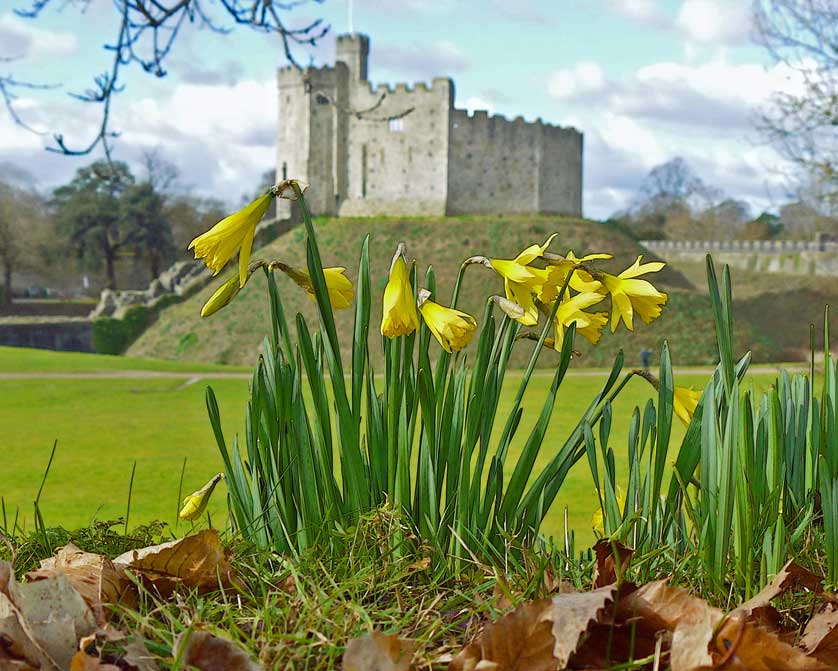

As a modern, forward-looking European city, Cardiff is also one of Europe's youngest capitals. After it became a city in 1905, subsequent decades saw a number of national institutions established, such as the University of Wales, the National Museum of Wales and the Welsh National War Memorial. Welsh capital status was finally bestowed on Cardiff in 1955.
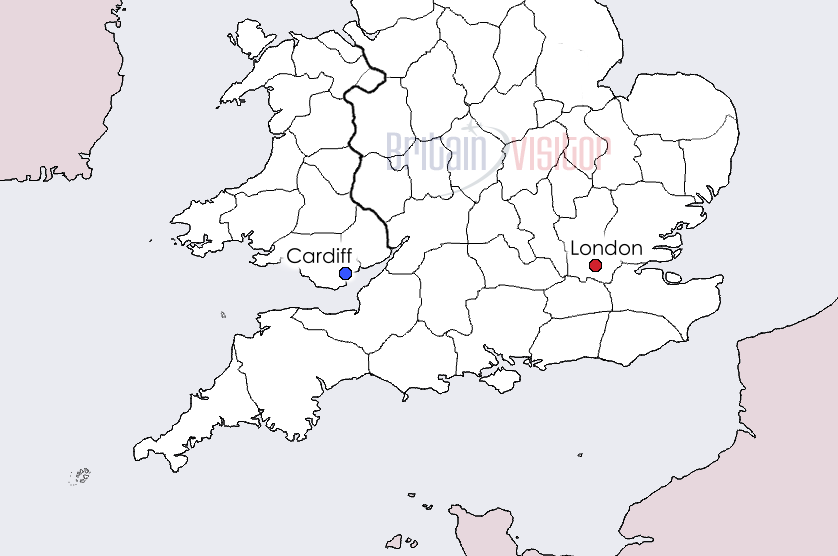
The closest British capital to London, Cardiff is just two hours away by rail or road and only an hour and a half's drive from Heathrow Airport. Cardiff is only a small city (population 300,000), so walking is the easiest way to see most of the attractions. If you want to take a trip to the suburbs then an efficient local rail service runs every 10 minutes for next to nothing.
A recent survey conducted by the University of Glasgow rated Cardiff and its surroundings fourth in the UK in terms of quality of life. The city can lay claim to having more parkland per head of population than any other British, an airily grand Portland stone civic centre modelled on Lutyens' plans for New Delhi, elegant Victorian and Edwardian shopping arcades, the largest collection of Impressionist paintings outside Paris and Europe's biggest free festival.

Cardiff Castle
In the heart of Cardiff's compact city centre lies Cardiff Castle, a truly remarkable structure with a history that spans over two millennia. It was here that Roman centurions once slept, noble knights held court, and the Bute family, with extraordinary wealth and vision, turned the site into a romantic Victorian fantasy.
Indeed, the grafting of Victorian mock-Gothic extravagance onto one of Cardiff's most important historical relics makes Cardiff Castle the city's leading attraction. Until it was donated to the city in 1947, this imposing structure was the private home of the Butes, who transformed Cardiff from a small town into the world's biggest coal port.
Archaeological surveys suggest that the Cardiff Castle site was first used by Roman legions as early as AD54, following the defeat of the Silures. Around AD 1100 the Normans appropriated the site for the construction of a stronghold, and more recently Lord Bute - Britain's richest man in 1868 - commissioned architect William Burges to transform the castle into a neo-Gothic palace. Much of the interior was restored and updated during the Victorian times and today visitors will discover a feast of marble, gilding and spectacular wood carvings.
For an alternative night out, visitors can try Cardiff Castle's traditional Welsh Banquet. This relaxed and fun evening of Welsh food, wine and music is held in either the fifteenth century undercroft or the Interpretation Centre. Banquets are held every Friday night from June to November but must be booked in advance.
Two miles north from the castle, the beautiful Llandaff Cathedral can be reached on foot by following the Taff Trail (which follows the course of the river), or by frequent buses from the central bus station.

Millennium Stadium
Cardiff was designated a City of Sport in the year 2009 and has events and facilities to match its status. Sports options here extend from world class football, rugby and athletics pitches to the Olympic-sized swimming pool at the International Sports Village and canoe slalom at the Cardiff International White Water Center.
Without doubt Cardiff's most impressive sports structure is the 80,000 seater Millennium Stadium, a spectacular piece of architecture that squats like a stranded spaceship on the River Taff's east bank.
The Millennium Stadium plays host to many games of the Welsh national football team and is also home to the Welsh rugby team; rugby is Wales' national game and when the crowd begins to sing at Millennium, the whole of Cardiff resonates. If you can't get tickets to a match, it's well worth taking a tour - visitors can see dressing rooms as well as walk down the tunnel and onto the pitch.
Cardiff Bay
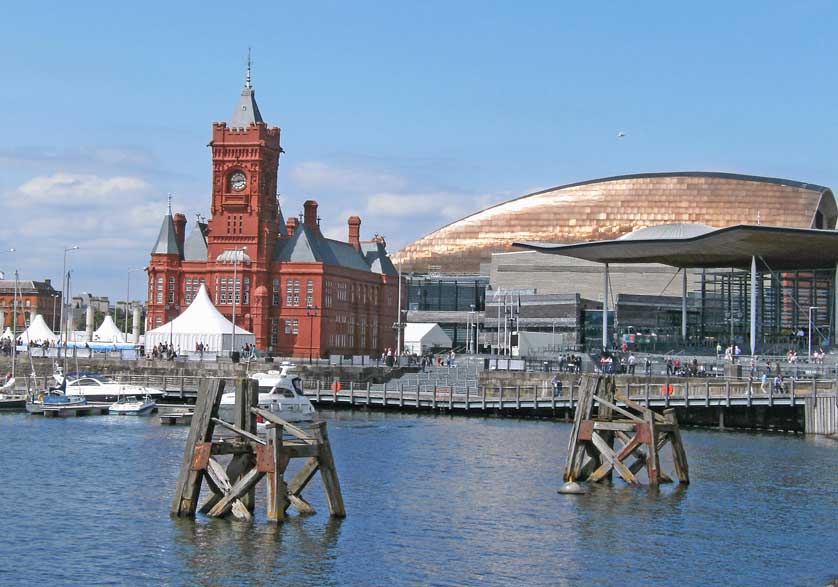
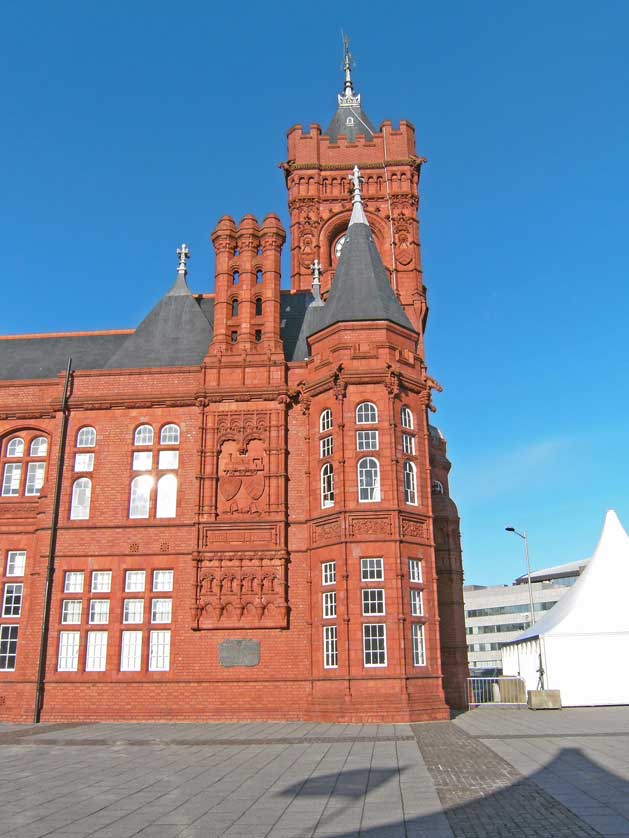
By the mid-twentieth century, with the decline of industry in the area, Cardiff docks had become largely abandoned. However, in 1999 the derelict Tiger Bay was redeveloped and transformed into the ultramodern Cardiff Bay - a complex of government buildings, arts centres, restaurants, bars and hotels.
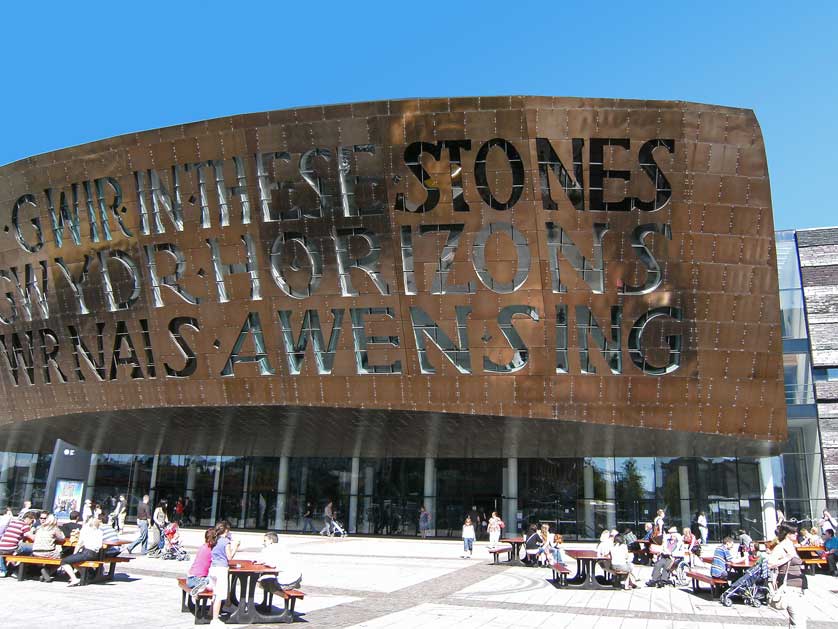
Today Cardiff Bay is Europe's largest waterfront development. It was here that the city not only gained the Welsh National Assembly, with its cutting-edge Senned building, but also the Wales Millennium Centre, an architectural masterpiece of stacked Welsh slate in shades of purple, green and grey, topped with an overarching bronzed steel exoskeleton.
Designed by Welsh architect Jonathan Adams, the Wales Millennium Centre opened in 2004 as Wales' premier arts complex, housing major cultural organisations such as the Welsh National Opera, National Dance Company, National Orchestra, Literature Wales, HiJinx Theatre and Ty Cerdd (Music Centre of Wales).
Visitors to the Wales Millennium Centre can enjoy blockbuster West End musicals, opera, ballet and contemporary dance, hip hop and stand up comedy, art exhibitions, workshops, training days, free daily foyer performances, bars and restaurants. There are also regular behind-the-scenes backstage tours and more specialist technical and architectural tours.
Civic Buildings
The civic buildings of Cardiff are grouped together in parkland (Cathays Park) adjacent to Cardiff Castle. It is here that visitors will find City Hall, with its beautiful ornate Clock Tower complete with Westminster chimes. Entry is free of charge - walk up to the first floor to see a range of Welsh heroes in marble, as well as a portrait of the late Diana Princess of Wales, who was given the freedom of the city in 1981.
Also here in the park is the National Museum, a must for anyone with an interest in natural and geological history, with pride of place is given to the Evolution of Wales exhibition. Starting at the time of the Big Bang, it follows Wales in her journey across the surface of the globe and through her many transformations. There are plenty of interactive activities to keep everyone entertained, and the Natural History display is perennially popular with adults and children.
Read more about museums in Cardiff and South Wales.
Wales has worked hard to earn itself a place on the gastronomic map so visitors can look forward to more exciting options on the menu than Welsh rarebit (tasty though that is). Many restaurants use Welsh ingredients such as sea trout and organic salt marsh lamb rather than serving typical Welsh dishes. Eighteen different cultures are apparently represented in the eating houses of central Cardiff, so visitors are spoiled for choice.
Situated in Castle Arcade, one of the most attractive arcades in the city, Celtic Cauldron is a whole food restaurant serving up traditional Welsh dishes such as excellent Glamorganshire sausage made from leeks, Caerphilly cheese and parsley. Blas ar Gymru (A Taste of Wales) is a mecca for tourists searching for a slice of old Wales. It's not hip, but big on taste, tradition and portion size.

Cardiff Shopping
Cardiff has worked hard to earn its reputation as one of the top ten shopping destinations in Britain, with a superb mix of the old and new. Cardiff Market (open 8 am to 5.30 pm every day except Sunday) has traded in one guise or another since the 1700s; the elegant glass-roofed Victorian structure it has inhabited for the past couple of centuries features some of the capital city's most-loved butchers and fishmongers, as well as an array of traditional confectioners and bakers.
Cardiff also boasts six Victorian arcades, offering an intimate environment for shoppers who enjoy an alternative to the well-trodden path of the high street. The Castle Quarter is made up of High Street Arcade, Duke Street Arcade and Castle Arcade - historic structures packed full of vintage clothing stores, handicraft boutiques and trendy cafes.
Cardiff hosts the biggest free arts festival in Europe. It may not have the profile of Edinburgh, but those that want entertainment without the hordes should check it out. Running from mid July into August it has some excellent events including street theatre, a comedy festival, a performance by Welsh National Opera and three days of live music on the lawns of City Hall.

Cardiff Hotels
The are dozens of hotels in and around Cardiff which cater to every budget. These range from backpacker accommodation as cheap as £10 per night to luxury accommodation such as the Royal Hotel Cardiff.
The voco St. David's Cardiff is located on the waterfront of Cardiff Bay. It offers stunning views, modern rooms, and a spa for relaxation.
The Hilton Cardiff provides comfortable rooms and amenities like a fitness center, on-site restaurant, and bar. It's conveniently located near popular attractions and shopping areas.
Radisson Blu Hotel, Cardiff near Cardiff Castle, offers stylish rooms, a bar, and a grill restaurant. It's within walking distance of the city's major attractions, shopping areas, and entertainment venues.
The four-star Mercure Cardiff Holland House Hotel & Spa features spacious rooms, a fitness center, an indoor pool, and a spa. It's located a short walk from Cardiff's city center.
Park Plaza Cardiff offers modern rooms, a restaurant, a bar, and a fitness center. It's close to Cardiff Castle and the Millennium Stadium.
Future Inn Cardiff Bay provides comfortable and spacious rooms, a restaurant, and free parking. It's located in Cardiff Bay, close to attractions like the Wales Millennium Centre.
Cardiff Access - Getting To Cardiff
Cardiff is the major transport hub in Wales. Cardiff boasts the two busiest railway stations in Wales including Cardiff Central railway station providing direct services to major cities such as Birmingham, London, Manchester, Edinburgh and Glasgow.
Cardiff Queen Street railway station is the second busiest in Wales and is the hub for Valley Lines services that connect the South Wales valleys and the Cardiff suburbs with the city centre.
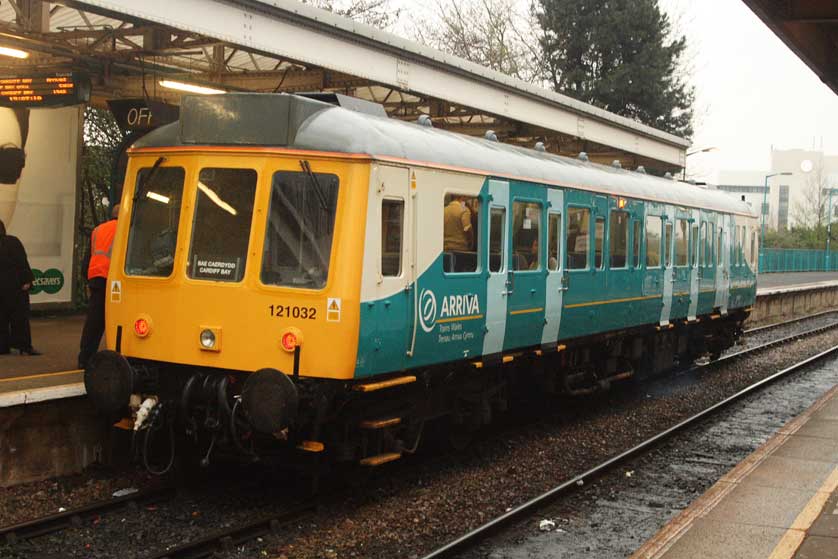
Cardiff Airport (CWL) provides domestic and international air links to Cardiff and is the only international airport in Wales.
As for motorways, the M4 connects Cardiff with Swansea to the west, and Newport and London to the east. Another important road, the A470, links Cardiff to the north with the Heads of the Valleys road, central and northern Wales.
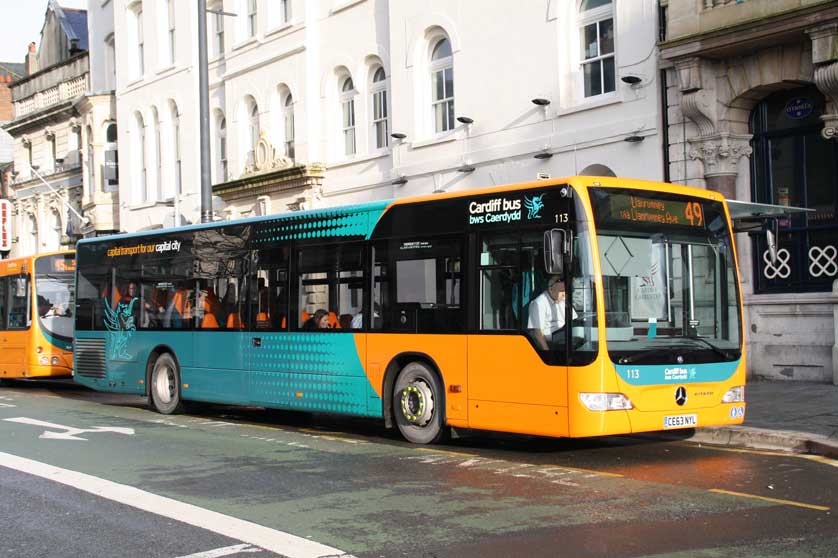
Cardiff is small enough to walk around with the bay area only about 30 minutes from the city centre. Buses are easy to use and visitors can buy a one-day pass.
The Cardiff Waterbus sails between Cardiff Waterfront and the Barrage at Penarth.
Cardiff & South Wales Map
Book Hotels in Cardiff - Booking.com
Find Hotels in Swansea - Booking.com