Quarry Bank Mill, Styal, Cheshire
Quarry Bank (Styal Mill)
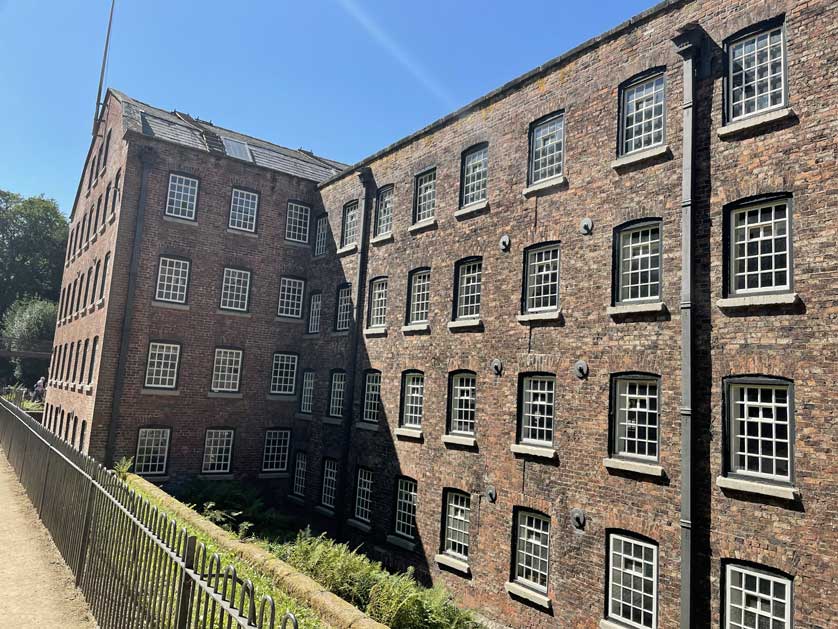
Quarry Bank in Styal, Cheshire, is like the UNESCO World Heritage Sites of Salt's Mill in Saltaire in Yorkshire and Cromford in Derbyshire, one of the defining businesses of the early Industrial Revolution in Britain.
The mill dates from 1784. The factory and the housing and working conditions of its labor force were the work of Samuel Greg (1758-1834) and his wife Hannah Lightbody (1766-1828). At its height Quarry Mill and other mills owned by the Greg family employed around 2,000 people in the cotton spinning and weaving trade.
The Bridgewater Canal transported raw cotton to near the mill from Liverpool.
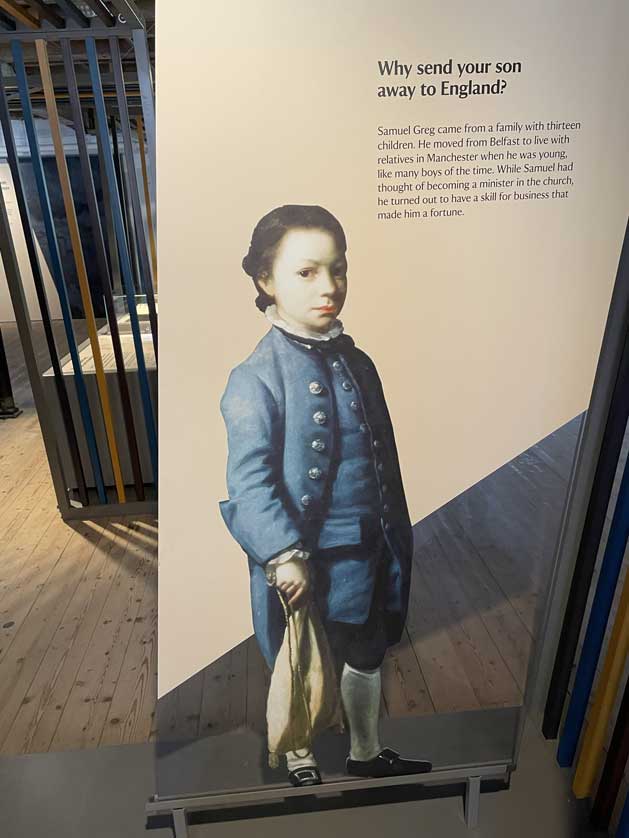
Samuel Greg & Family
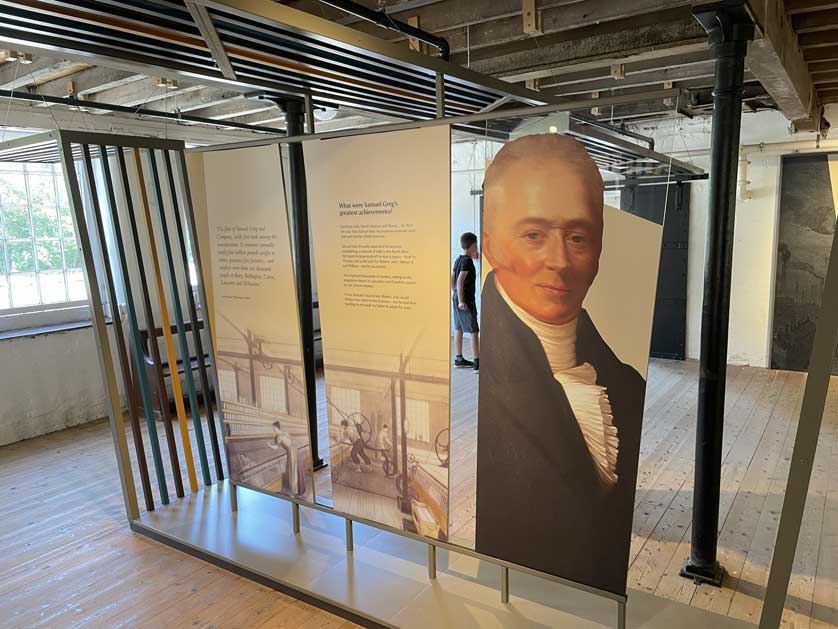
Samuel Greg was a Belfast-born entrepreneur and a pioneer of the early Industrial Revolution in Britain.
His father was a successful trans-Atlantic businessman with interests in shipping in New York as well as a sugar plantation in Dominica, run with slave labor.
As a young boy, Samuel was sent to live in Manchester and joined the family's linen business there in the late 1770s.
In 1789 Greg married Hannah Lightbody, the daughter of a wealthy Liverpool merchant. She introduced her Presbyterian husband to Unitarianism as well as a network of her family's business connections.
Samuel Greg invested his wife's dowry of £10,000 in the building of Quarry Bank Mill on the banks of the River Bollin in Cheshire. The family hoped to prosper from the new technologies of water and steam power to mass produce cotton cloth on an industrial scale.
Samuel and Hannah had 13 children together born between 1790 and 1808 After Samuel was injured in an attack by a stag on the grounds of his factory estate, his son Robert Hyde Greg took over the running of the mill. A later descendant Alexander Carlton Greg donated the factory and its estate to the National Trust in 1939.
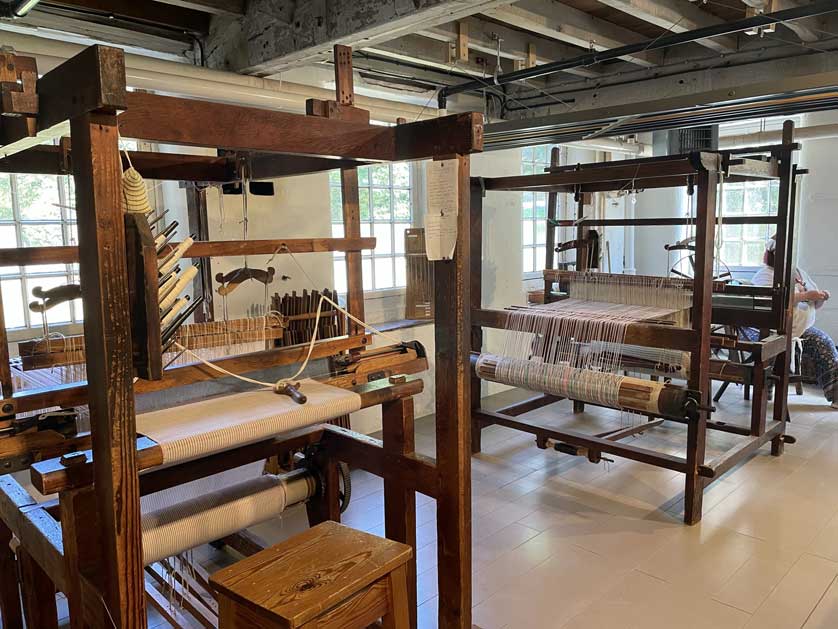
The Mill
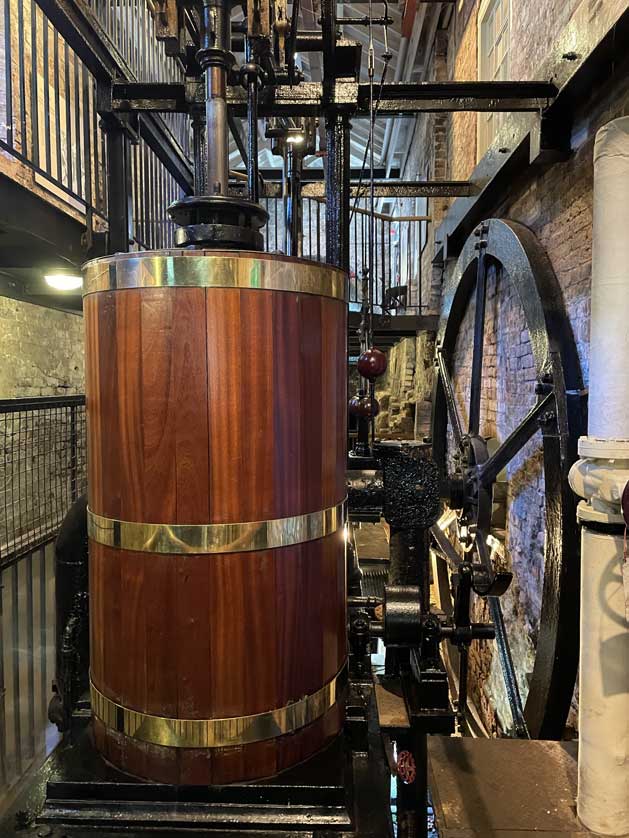
A huge waterwheel initially provided power for the mill. Later this was supplemented with steam power. Indeed, Quarry Bank is still home to the most powerful working waterwheel in Europe - the Great Wheel.
It was built in iron by Thomas Hewes between 1816 and 1820 and was the fourth wheel to be installed.
The internal structure of the mill was cast iron and brick to decrease the chance of fire. The mill continued producing cotton fabric until 1959.
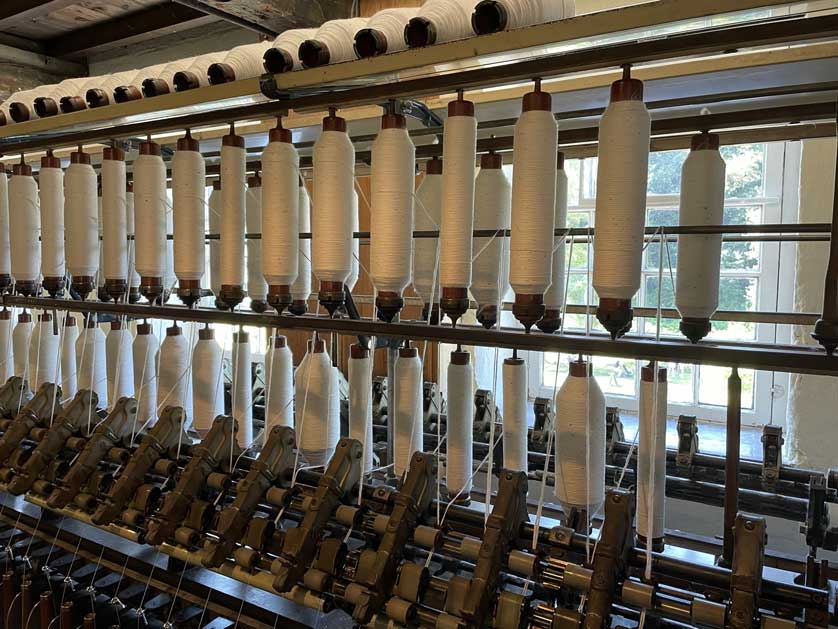
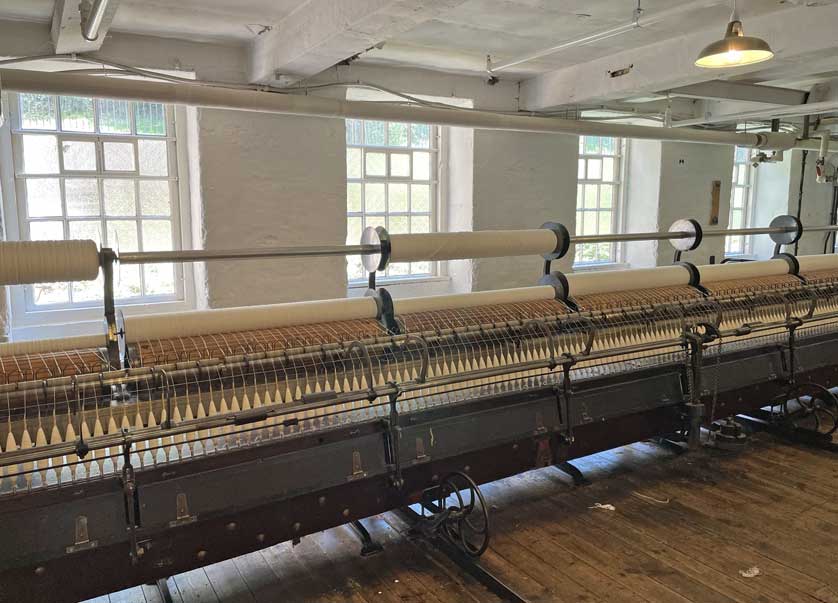
There are volunteers on hand to demonstrate the cotton-spinning machinery in action as well as wall-panels explaining the history of the mill and the Industrial Revolution in the UK.
Nowadays, the mill buildings include a cafe/restaurant for light refreshments, tea and coffee as well as an ice cream parlour and a small shop.
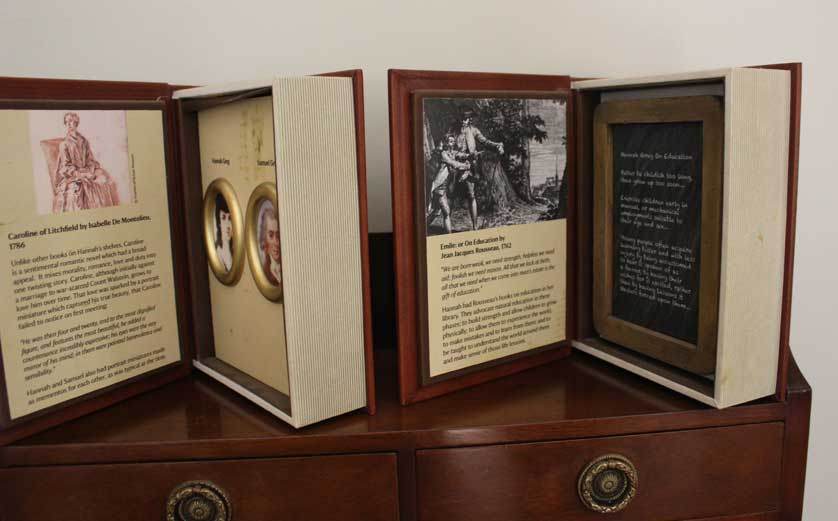
Quarry Bank House
Samuel Greg and Hannah Lightbody lived in Quarry Bank House adjacent to the mill. Hannah preferred the rural setting in the Cheshire countryside to the smoky, industrial city of Manchester.
Though not grand in scale, Quarry Bank House is a comfortable residence which was the site of various social gatherings and debates on the issues of the day.
On display are personal effects and furniture of the extended Greg family.

Apprentice House
The Apprentice House housed around 90 children who worked at the mill. They were brought from poor houses (for a fee) from around the country particularly London, then Liverpool and surrounding towns in the northwest.
Around 50% of the early workforce consisted of indentured children until the mid-19th century. They worked 12 hours a day, 6 days a week but received food, lodging in single-sex dormitories, medical care and an education of sorts.
Hannah Lightbody supervised the housing and conditions of the child employees, including religious instruction at Norcliffe Chapel, to this day an active Unitarian chapel.
The children enjoyed no free time or space to play and several attempted to escape their lives of toil.
Chapel Woods
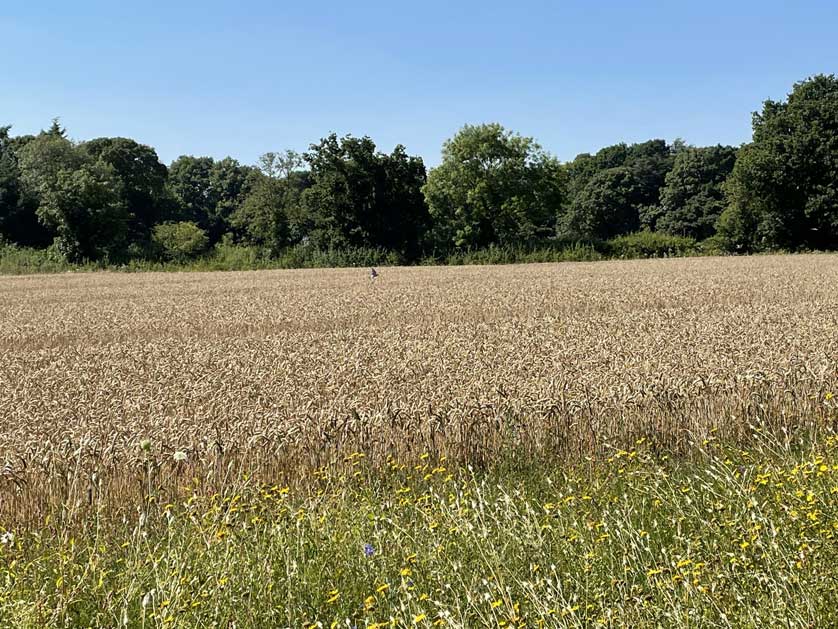
When Samuel Greg leased the land for his industrial estate from Lord Stamford, he was forbidden by the terms of the lease to clear the woodland.
Robert Hyde Greg and his siblings, unlike the indentured children, used the woods as an extended playground. As an adult, Robert Hyde Greg added folly bridges and exotic trees to this wonderful landscape.


Styal Village
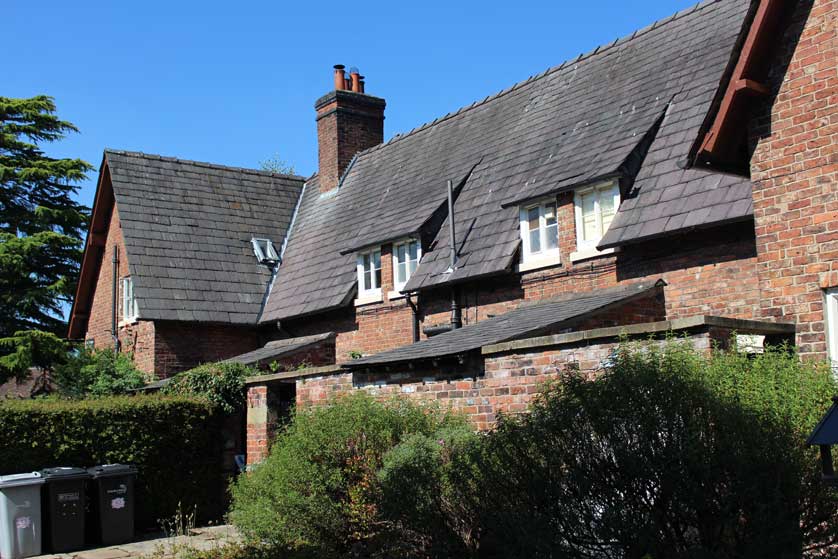
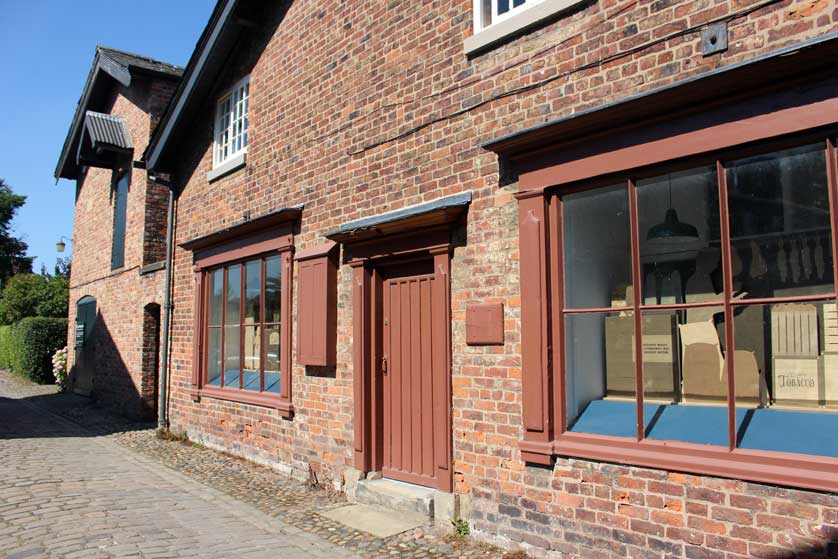
Like Robert Owen in New Lanark in Scotland after him, Samuel Greg envisaged a country village for his new industrial community. This included Oak School to educate his child laborers and the Norcliffe Chapel where his employees could worship. Styal Village is a small community of workers' two-up-two-down, terraced, cottages. They were often crowded with as many as 14 people crammed into each house.
Access
Styal
Wilmslow
Cheshire, SK9 4HP
Tel: 01625 527468
www: nationaltrust.org.uk/quarry-bank
For opening times see the website above.
Quarry Bank Mill is close to Manchester Airport and within easy reach of both Manchester and nearby Stockport.
The nearest railway stations are at Styal just half a mile away; Manchester Airport 2 miles and Wilmslow Station also 2 miles distant.
By road, Quarry Bank is off the B5166, 2 miles from the M56 motorway, exit 5. Brown heritage signs lead to the mill from the A34 and M56.
Access - Getting to Quarry Bank
Manchester
There are regular trains from Piccadilly Station to Wilmslow. From here take an Altrincham-bound bus (number 88) to Dooley Lane. From here the mill is a 20-minute walk.
From Manchester Airport take a Crewe-bound train to Styal (10 minutes) and then walk about 10 minutes from the station.
By car the journey takes about 30 minutes on the M56 and A5103.
Stockport
From Stockport, Quarry Bank is best reached by car and is about a 20-30 minutes drive depending on traffic.
Liverpool
From Liverpool again car on the M62 is the quickest means of getting there. Journey time is about an hour.
Birmingham
From Birmingham New Street Station in Birmingham, there are trains to Crewe and then connections to Styal. By car expect a journey of around 2 hours on the M6 heading north.
Industrial Sites in Britain
Hotels in the UK
Book Hotels in England - Booking.com
Find Accommodation in London - Booking.com
Search Hotels in Scotland - Booking.com
Hotels in Northern Ireland - Booking.com