Lacock Guide

Lacock in Wiltshire in the Cotswolds has featured atmospherically in numerous films, from Harry Potter to Cranford and Pride and Prejudice. It is one of the most picturesque villages in the Cotswolds if not the most picturesque.
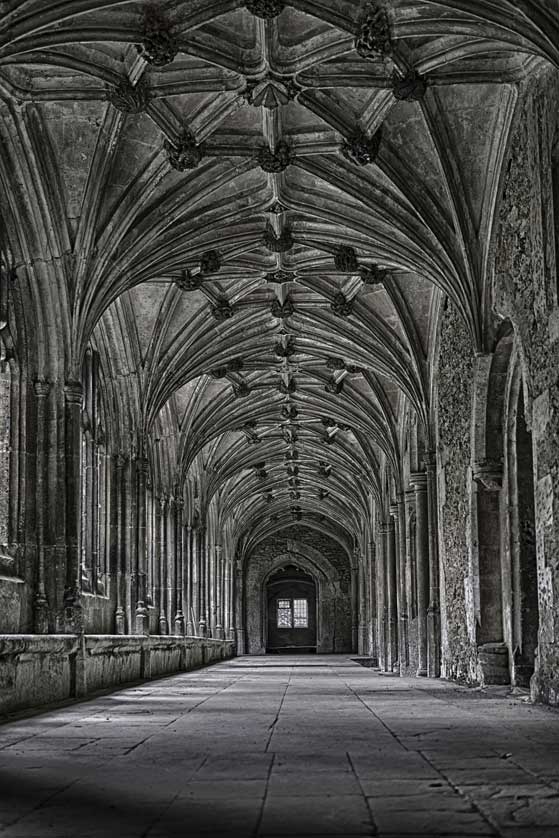
Lacock History
Lacock was mentioned in the Domesday Book of the Norman period, with a population of just 160 - 190 people.
Since the Middle Ages, Lacock Village had been a prosperous wool town known for its sheep and weaving. However, that trade waned with the advent of cheap cotton imports from the United States in the 19th century.
From the time of Henry VIII until 1944, the Talbot family were the landlords of Lacock Village. In 1944, Miss Matilda Talbot gifted Lacock Village to the National Trust.
Since that time, the National Trust has attempted to maintain the 17th and 18th-century character of the village by avoiding obtrusive modernization. There are no overhead power cables or street lighting.
Nowadays, the village has a population of just over 1,150 inhabitants.

Lacock Attractions
Lacock Abbey dates from the 13th century, but it was seized by Henry VIII, sold, and converted into a house in 1539.
The interior of the Abbey was made famous by the appearance of its cloisters in two of the early Harry Potter films.
The abbey's most famous resident was William Henry Fox Talbot (1800-1877) who played a major role in the invention of photography. The Fox Talbot Museum has exhibits of Fox Talbot's early negatives, the first of which was taken in the abbey.
The 15th-century tithe barn in the village, close to Lacock Abbey, was where the Augustinian nuns of the abbey would store their grain, paid in kind by the villagers.

Churches
St Cyriac's Parish Church was built around 1480 AD, but the site has been used as a church since at least Norman and possibly even Saxon times. At the time of its building, Lacock was a prosperous wool town.
The name of St Cyriac comes from a 3-year-old child martyred in Cilicia (now part of modern-day Turkey) in 303 AD. St Cyriac’s was restored in 1861 by the architect Arthur Blomfield.
The nave of the church was rebuilt in 1861 and features a fine wagon roof. The chancel at the far end of the nave was rebuilt in 1771 and remodeled in 1902. It is dedicated to William Henry Fox Talbot of Lacock Abbey.
Shopping
The village has a few local shops including a general store and a gift shop. For afternoon tea, there is nowhere better than the village's oldest building, King John's Hunting Lodge. It is a 13th century house with garden. The recommended restaurant serves locally-sourced food wherever possible. As the name suggests it was a hunting lodge for King John for hunts in nearby Melksham Forest.
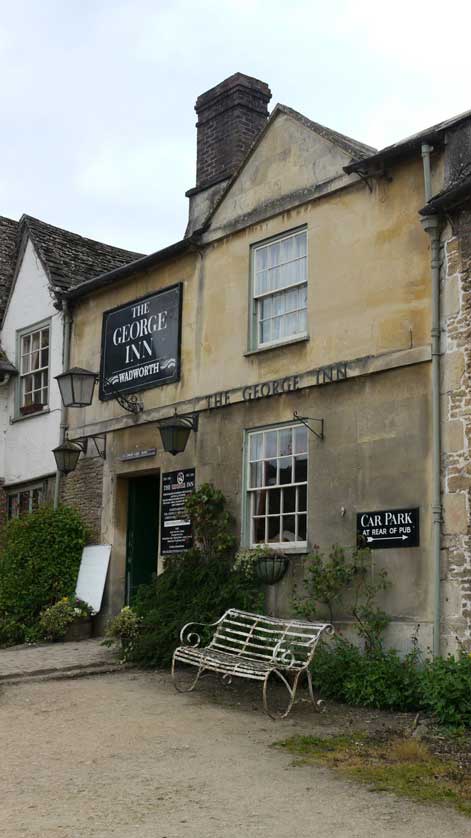
Pubs
The George Inn at Lacock is located in a building which has been used as a pub since 1361. The pub maintains its historic feel with features such as low ceilings and uneven floors.
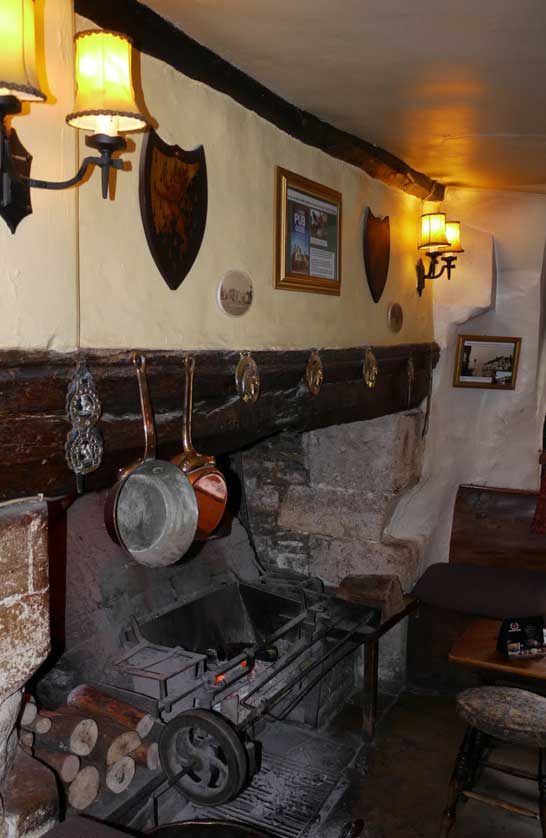
One interesting feature at the George Inn is the turnspit dog wheel. The turnspit dog is an extinct breed that was trained to turn the wheel which was connected to a spit over an open fire that would rotate and cook the meat evenly.
The George Inn on West Street is family friendly and features an extensive garden used as an outdoor eating area in the summer.
The pub serves traditional British food with a twist and also has rooms.
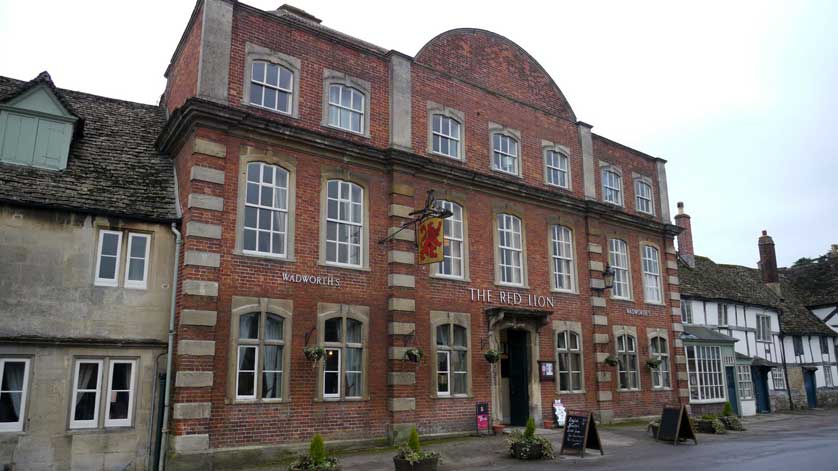
The brick Red Lion at 1 High Street in Lacock is both a pub and bed and breakfast. The Red Lion pub has a history that stretches over 200 years. It recently appeared as a shop in the BBC series, The Cranford Chronicles.
Around Lacock
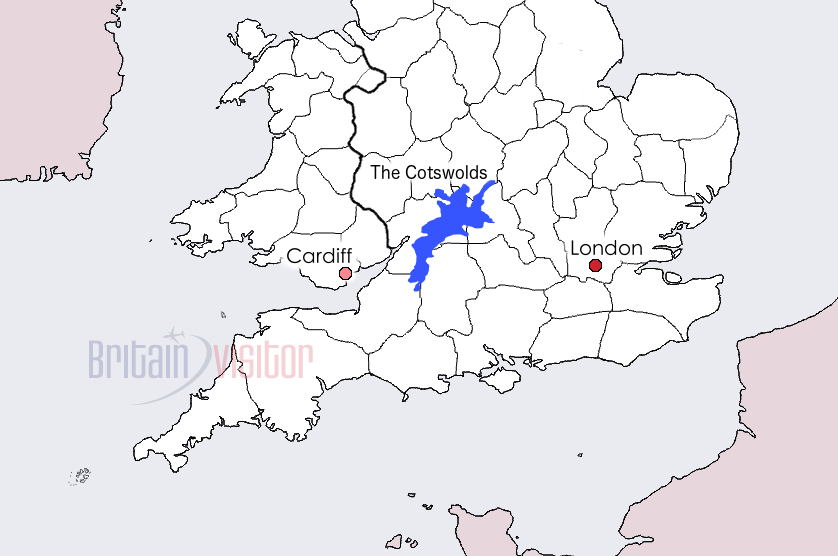
The Cotswolds is around 40 km across and 145 km long. The Cotswolds stretches from Stratford-upon-Avon to Bath.
Located eight miles north of Cheltenham, Sudeley Castle is a honey-colored stone edifice complete with banqueting hall. It was once owned by Katherine Parr, the last wife of Henry VIII.
Typical Cotswold towns include Chipping Norton, Moreton-in-Marsh and Stow-on-the-Wold. One Cotswold town, Chipping Campden, is well-known for being the home of the Arts and Crafts movement, founded by William Morris at the end of the 19th century.
Four miles from Chipping Campden lies Hidcote Manor. It features one of the most inventive gardens of the 20th century.
The Slaughters are another Cotswold treat. The visitor should take the easy, mile-long stroll between the twin villages of Upper and Lower Slaughter. The path runs beside the River Eye past scenic cottages and around an old flour mill, now converted into a tea and craft shop and a museum. By the way, the name "Slaughter" has nothing to do with meat production but rather derives from the Anglo Saxon word for mud.
Bourton-on-the-Water is a very popular town in the Cotswolds and draws hordes of visitors to its beautifully crafted Model Village, the Bourton Model Railway, and the Dragonfly Maze.
Cheltenham abounds in elegant architecture with Regency terraces and swirling wrought-iron flourishes along Suffolk Square and Queen's Parade on Parabola Road.
Cheltenham also offers an absorbing art gallery and museum called The Wilson, named after Edward Wilson, who was born in the town and who died in 1912 on Scott's Antarctic expedition. The permanent collection includes a renowned exhibition on the Arts and Crafts movement.
The Cheltenham Festival in March is a highlight of the National Hunt horse racing calendar and brings visitors from all over the country.
Lacock Hotels
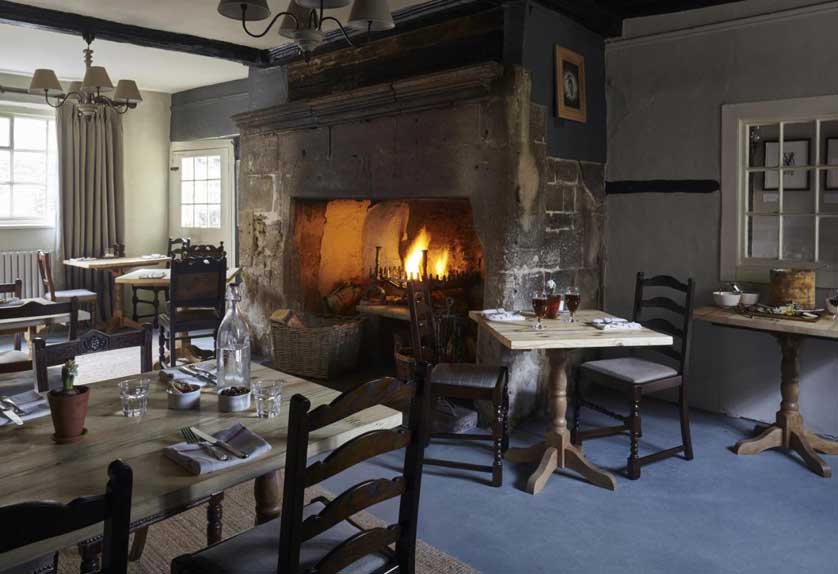
Places to stay include the superbly-named Sign of the Angel and The Red Lion. As a luxury place to stay, the Red Lion offers rooms with a flat-screen TV, private bathroom, and free WiFi. A full English breakfast is available in the recommended restaurant in the morning.
You can also book rooms at the George Inn which offers free WiFi throughout the property as well as superb food and drink.
See here for a complete listing of places to stay in Lacock.

Cotswolds Access - Getting To The Cotswolds
Lacock is located just off the A350 three miles (5 km) south of Chippenham in Wiltshire.
The village is 25 miles (40 km) south of Cirencester on the A429 and 12 miles (19 km) west of Avebury on the A4.
Bath is 22 km to the west on the A4 and Swindon 40 km away on the A350 and M4.
By Rail: All rail service from London to the Cotswolds departs from Paddington Station, which has its own London Underground station.
To travel to the Cotswolds from London by train takes about 1 ½ hours and trains run every hour, 7 days a week. Although rail services do not cover the whole of the Cotswolds, it is possible to travel to and from Bath, Cheltenham, Stratford, Chippenham, Gloucester, Kemble, Moreton-in-Marsh Station, Kingham and Oxford.
By Car: Driving from London to the Cotswolds takes about 2 hours and utilizes well sign-posted major roads. The M4 motorway provides easy access to Bath, Castle Combe and the South Cotswolds. The M40 motorway provides access to Oxford and Stratford and the North Cotswolds.
By Coach: National Express offers coach service to the Cotswolds. The main route to the Cotswolds from London starts at Victoria Coach Station and takes about 3 - 4 hours. Coaches run regularly from London to the Cotswolds, although there is no service on Sundays. The main coach stops in and around the Cotswolds are at Bath, Bourton-on-the-Water, Cheltenham, Chippenham, Gloucester, Moreton-in-Marsh, Northleach, Oxford, Stow-on-the-Wold, Stratford-upon-Avon, Stroud.
Cotswolds Maps
Hotels in the UK
Book Hotels in England - Booking.com
Find Accommodation in London - Booking.com
Search Hotels in Scotland - Booking.com
Hotels in Northern Ireland - Booking.com