Upper & Lower Slaughter Guide

The Slaughters are a Cotswolds treat. They have been described as the "prettiest villages in England."
The word 'Slaughter' comes from the old English word slohtre meaning marshy place or mud.
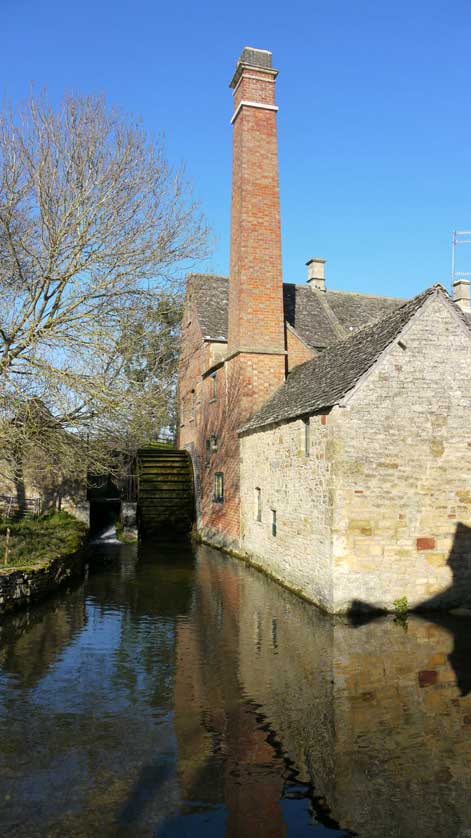
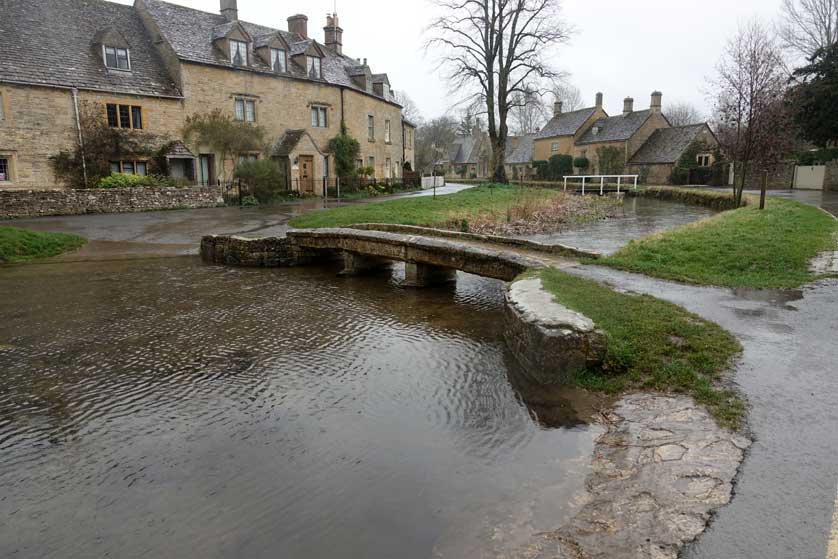
An easy, mile-long stroll links the twin villages on a path that runs beside the River Eye, a tributary of the River Windrush, past scenic cottages and around the old flour mill.
History
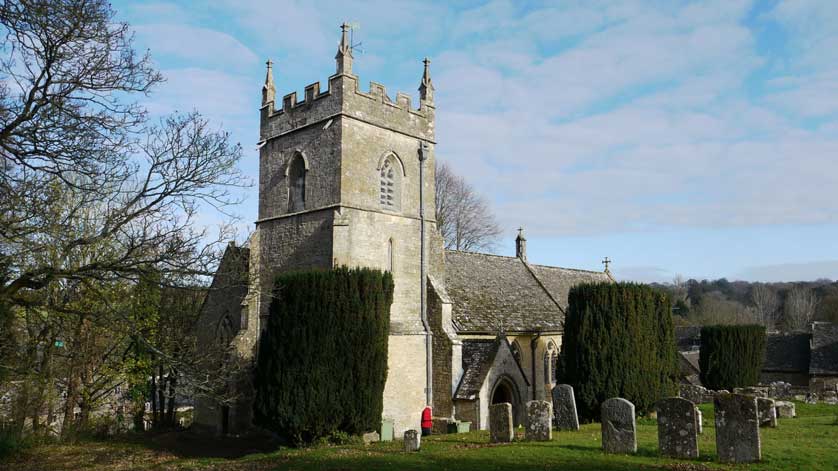
Both villages are mentioned in the Domesday Book of 1086. They were under the control of a family called Slaughter from the 12th century on. Upper Slaughter was once dominated by a Norman castle of which little remains, except the mound on which it was constructed. The castle dated from The Anarchy period of English history of the 12th century.
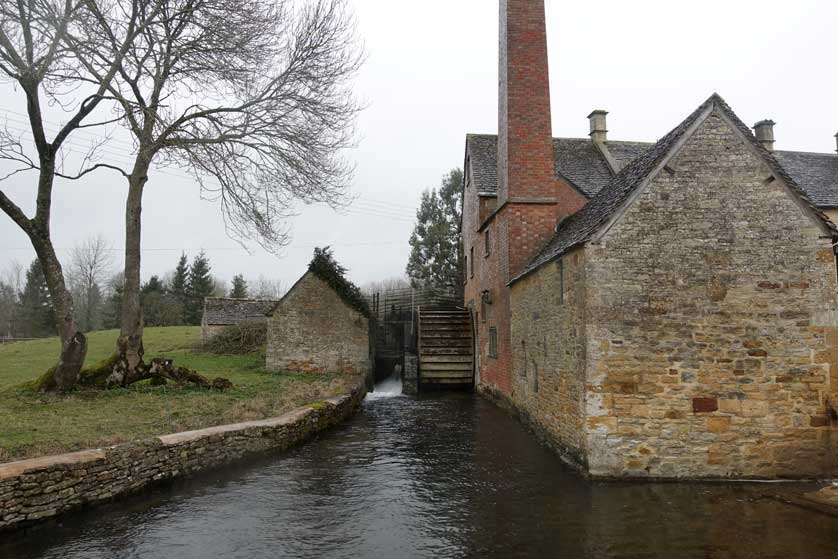
The Old Mill in Lower Slaughter was built in the 19th century and was last operated as a mill in 1958. It now serves as a tea and craft shop and a museum.
Nowadays the main business in both villages is tourism. There are several upmarket places to stay and enjoy this particular part of England.
Attractions
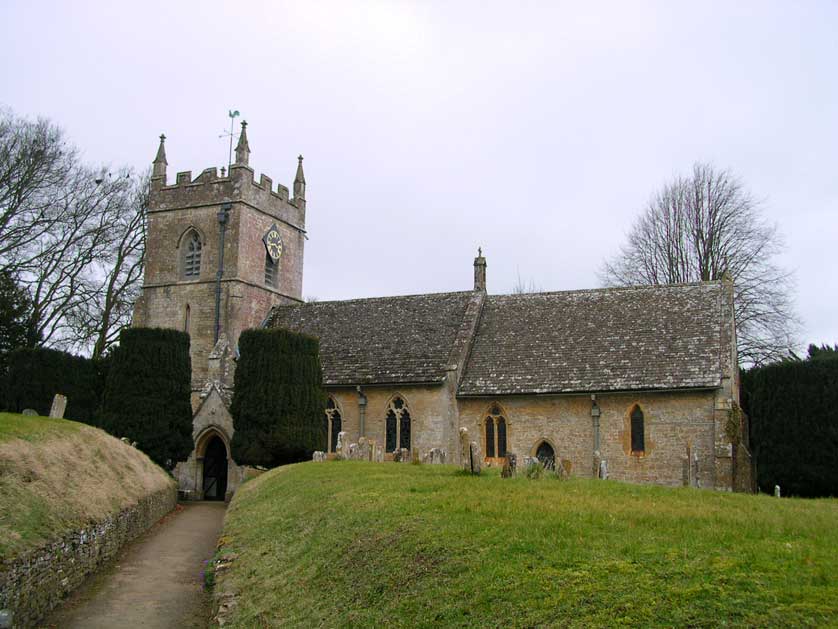
The Parish Church of St. Peter in Upper Slaughter has elements dating from Saxon times but is by and large a Norman era church (Norman elements date from the 12th century AD). The Domesday Book of 1086 mentions the manor.
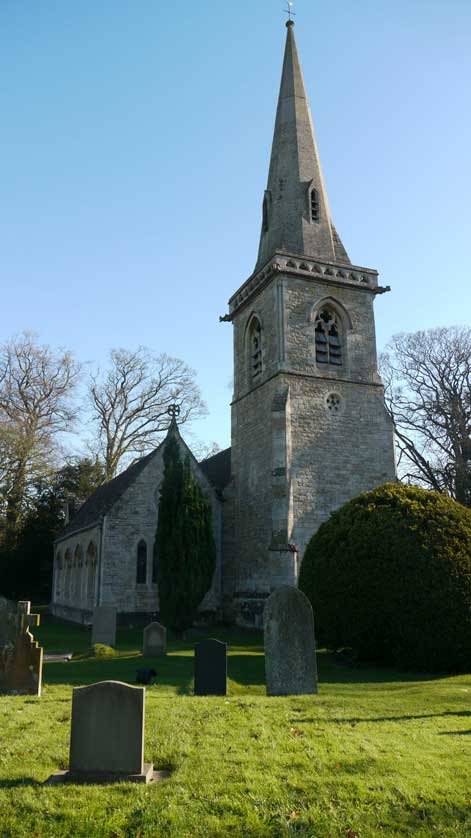
In Lower Slaughter visitors can also see the lovely Parish Church of St Mary. This church was built in 1867 in the 'Early English' and 'Decorated' styles. The present church replaced an earlier one built in the 13th century AD.


Around Upper & Lower Slaughter
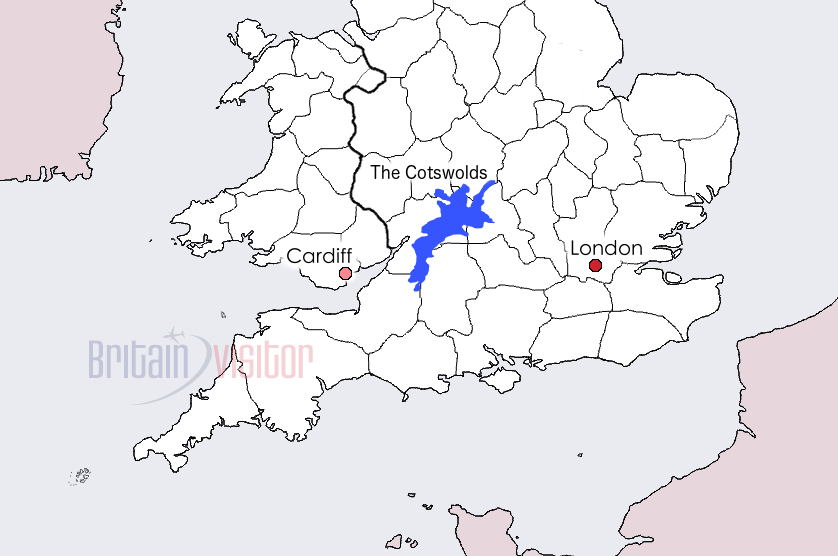
The Cotswolds is around 40 km across and 145 km long. The Cotswolds stretches from Stratford-upon-Avon to Bath.
Located eight miles north of Cheltenham, Sudeley Castle is a honey-colored stone edifice complete with banqueting hall. It was once owned by Katherine Parr, the last wife of Henry VIII.
Typical Cotswold towns include Burford, Chipping Norton, Moreton-in-Marsh and Stow-on-the-Wold. One Cotswold town, Chipping Campden, is well-known for being the home of the Arts and Crafts movement, founded by William Morris at the end of the 19th century.
Four miles from Chipping Campden lies Hidcote Manor. It features one of the most inventive gardens of the 20th century.
Lacock has featured atmospherically in numerous films, from Harry Potter to Cranford and Pride and Prejudice. Visitors shouldn't miss Lacock Abbey, a medieval dwelling turned country house that also celebrates the work of its former resident, Henry Fox Talbot, who invented the photographic negative.
Bourton-on-the-Water is a very popular town in the Cotswolds and draws hordes of visitors to its beautifully crafted Model Village, the Bourton Model Railway, and the Dragonfly Maze.
Cheltenham abounds in elegant architecture with Regency terraces and swirling wrought-iron flourishes along Suffolk Square and Queen's Parade on Parabola Road.
Cheltenham also offers an absorbing art gallery and museum called The Wilson, named after Edward Wilson, who was born in the town and who died in 1912 on Scott's Antarctic expedition. The permanent collection includes a renowned exhibition on the Arts and Crafts movement.
The Cheltenham Festival in March is a highlight of the National Hunt horse racing calendar and brings visitors from all over the country.

Upper & Lower Slaughter Hotels
If you wish to stay in this lovely area of England possibilities include the five-star The Slaughters Country Inn and the 17th-century The Slaughters Manor House, also five stars. The latter is the largest business in the village.
See here for a listing of places to stay in the Cotswolds.
Cotswolds Access - Getting To The Cotswolds
The villages are located between the B4068 and the A429 just north of Bourton-on-the-Water. It takes around 30 minutes to walk from Bourton-on-the-Water to Lower Slaughter.
Visitors to the villages may also want to visit nearby Stow-on-the-Wold, or Burford.
The nearest large towns to the village are Oxford, Swindon, Gloucester, Stroud and Cirencester.
By Rail: All rail service from London to the Cotswolds departs from Paddington Station, which has its own London Underground station.
To travel to the Cotswolds from London by train takes about 1 ½ hours and trains run every hour, 7 days a week. Although rail services do not cover the whole of the Cotswolds, it is possible to travel to and from Bath, Cheltenham, Stratford, Chippenham, Gloucester, Kemble, Moreton-in-Marsh Station, Kingham and Oxford.
By Car: Driving from London to the Cotswolds takes about 2 hours and utilizes well sign-posted major roads. The M4 motorway provides easy access to Bath, Castle Combe and the South Cotswolds. The M40 motorway provides access to Oxford and Stratford and the North Cotswolds.
By Coach: National Express offers coach service to the Cotswolds. The main route to the Cotswolds from London starts at Victoria Coach Station and takes about 3 - 4 hours. Coaches run regularly from London to the Cotswolds, although there is no service on Sundays. The main coach stops in and around the Cotswolds are at Bath, Bourton-on-the-Water, Cheltenham, Chippenham, Gloucester, Moreton-in-Marsh, Northleach, Oxford, Stow-on-the-Wold, Stratford-upon-Avon, Stroud.
Cotswolds Maps
Hotels in the UK
Book Hotels in England - Booking.com
Find Accommodation in London - Booking.com
Search Hotels in Scotland - Booking.com
Hotels in Northern Ireland - Booking.com