Moreton-in-Marsh Guide

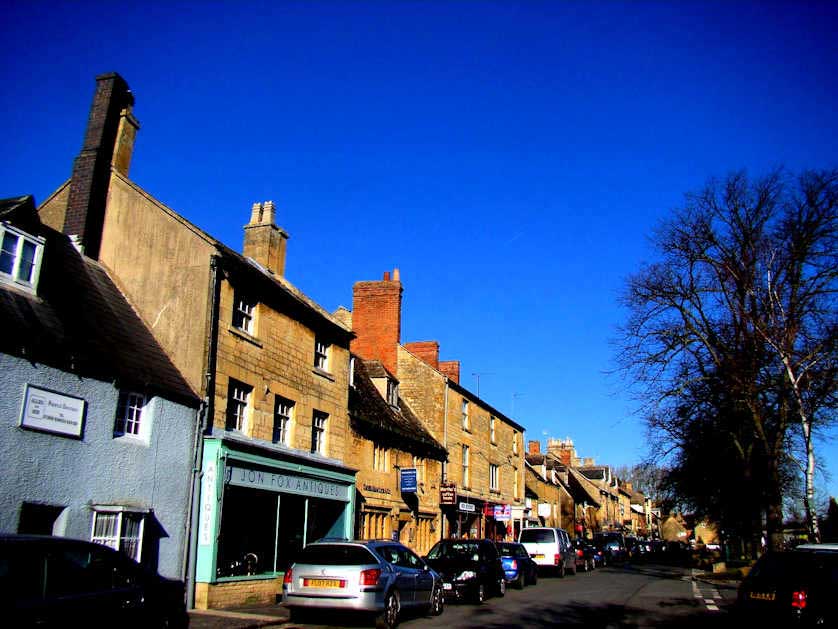
Moreton-in-Marsh is a small, picturesque village in the North Cotswolds.
Today it is the only place within the Cotswolds Area of Outstanding Natural Beauty to have a main line railway station and so is a gateway to the area.
Moreton-in-Marsh History
The name Moreton-in-Marsh comes from Old English and means "Farmstead on the Moor".
Situated on the Fosse Way, the ancient Roman road that ran from Exeter to Lincoln, there has been a settlement here since at least Saxon times.
Later it became a stop on the London to Worcester coach road and so many coaching inns proliferated. The most famous overnight guest in the town was Charles I who stayed in the White Hart Inn on July 2nd 1644.
Nowadays, the town has a population of around 3,500 inhabitants.
Moreton-in-Marsh Attractions
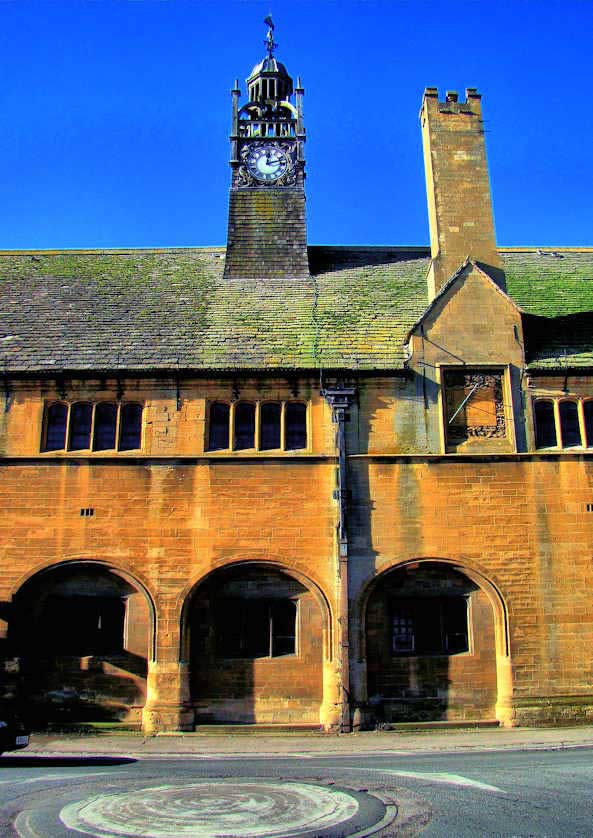
Redesdale Hall is the most prominent landmark in the town centre of Moreton-in-Marsh in the Cotswolds. Standing in the middle of the wide High Street where the famous street market is held, it was built in 1887. The building was paid for by Sir Algernon Bertram Freeman Mitford Lord-of-the-Manor of Moreton-in-Marsh in memory of his relative Lord Redesdale. The hall now operates as a kind of community center being used for classes, fairs, concerts, and other events, many open to the public.
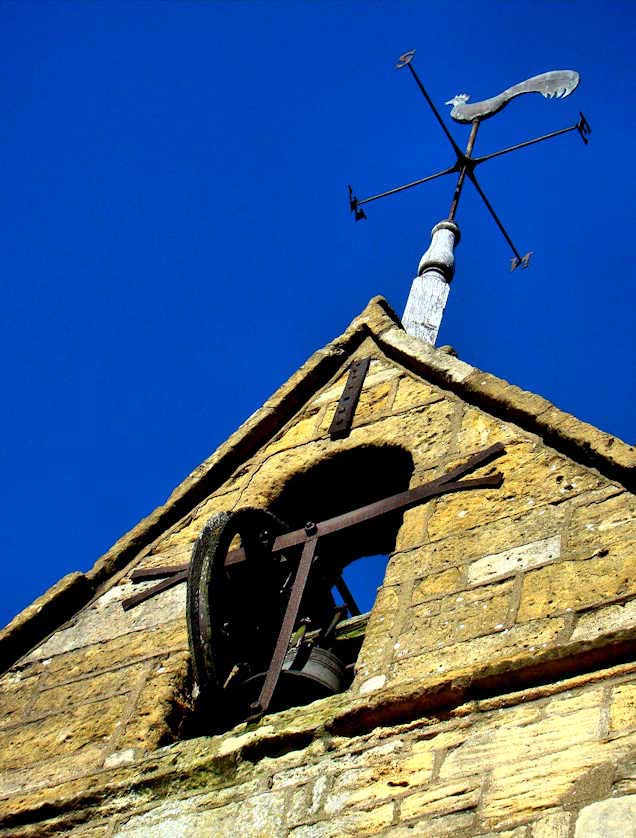
The oldest building in Moreton-in-Marsh is believed to be the Curfew Tower. Dating back to the 16th century the tower contains a bell and a clock that have been dated to 1633 and 1648. Located on the corner of the High Street and Oxford Street, the room below the tower was used as a gaol for drunks and other petty criminals as the town lacked any other such facility. According to a local story, Sir Robert Fry was lost in the fog one day and was guided home by the bell. In gratitude he gave a grant to employ the bell ringer and maintain the bell. It rang every evening until 1860.
Moreton-in-Marsh grew as a market town in the 13th century after receiving its market charter in 1227. The town's High Street was made very wide specifically to house the market stalls.
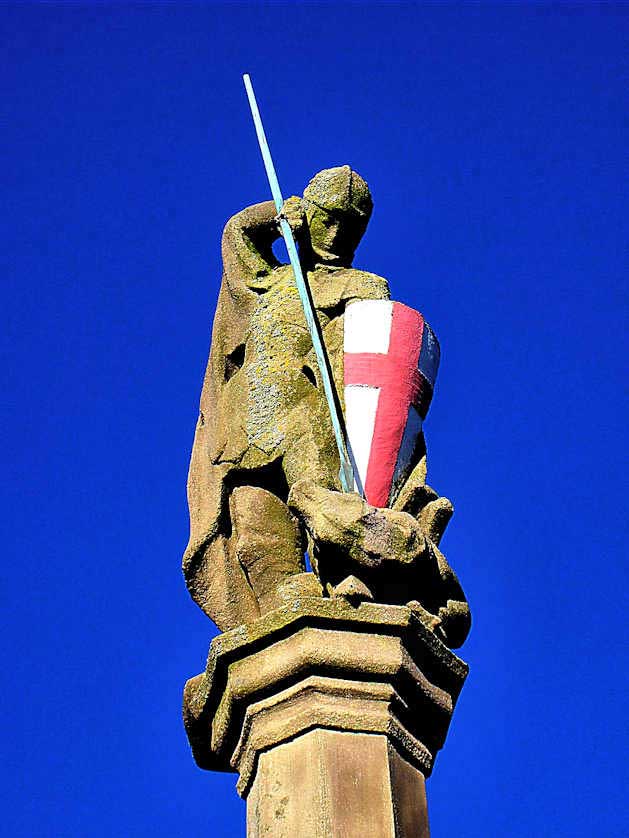
At the north end of the central section of the High Street where the market is held is a monument to Saint George.
Enclosed within a circle of stone benches, a narrow stone pillar is topped with a statue of St. George battling a dragon. Saint George was a soldier of Greek-Palestinian parentage in the Roman army serving in the Praetorian Guard of Emperor Diocletian.
He was executed in 303 for refusing to recant his Christian faith. The story of his fighting the dragon seems to have surfaced in the 11th and 12th centuries and the story is set in what is now Libya although a hero vanquishing a dragon appears in many ancient cultures prior to this. In 1348 King Edward III adopted Saint George as the patron saint of his Order of the Garter and incorporated the red cross on a white background into his standard.
Batsford Arboretum and Garden Centre is a 56-acre garden with plants and trees collected from around the world. There is also a cafe and children's playground at the site. Outdoor theatrical performances are also held here in summer.
The Cotswold Falconry Centre is next to Batsford Arboretum and home to around 150 birds of prey including falcons, of course.
The Wellington Aviation Museum located in an old Victorian school building has a private collection of RAF memorabilia and aviation art. It is open every Sunday from 10 am to 4 pm.
Shopping
The open-air street market still takes place every Tuesday and is the largest in all of the Cotswolds with up to 200 stalls. The High Street offers plenty of other shopping experiences with antiques being popular.
Pubs
The town is well served with eateries of many kinds as well as bakeries, tea rooms, and lots of coffee houses. Pubs and inns also abound including the White Hart, where Charles I stayed, apparently without paying his bill, and the Bell Inn, generally believed to have been the inspiration for the Prancing Pony in the Tolkien story Lord of the Rings.
Other pubs in the town include the Redesdale Arms serving traditional British food with locally grown vegetables as well as local game birds and fresh Cornish seafood. You can book rooms at the Redesdale Arms here.
The Bell Inn on the High Street is housed in an historic stone coaching inn. (Book a room with Booking.com)
The Black Bear Inn right on the High Street in Moreton-in-Marsh is a very popular local pub. The Black Bear has a beer garden and offers lunches and evening meals.
Around Moreton-in-Marsh
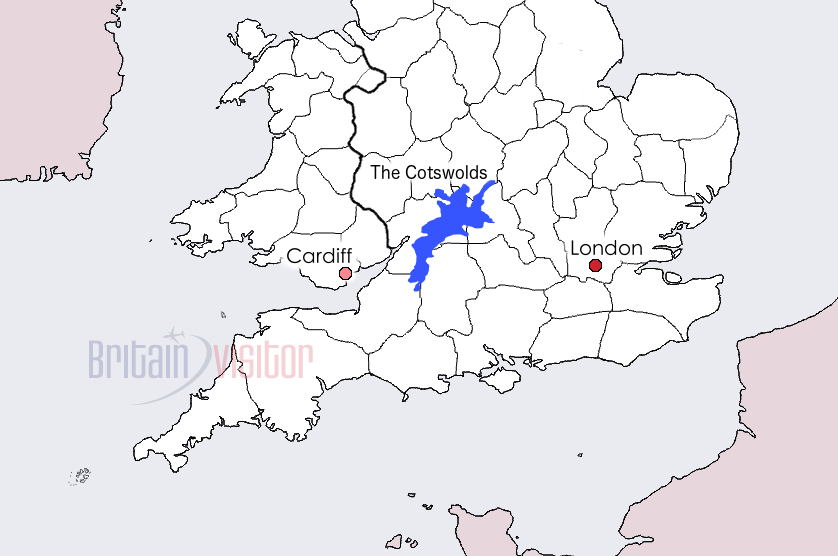
The Cotswolds is around 40 km across and 145 km long. The Cotswolds stretches from Stratford-upon-Avon to Bath.
Located eight miles north of Cheltenham, Sudeley Castle is a honey-colored stone edifice complete with banqueting hall. It was once owned by Katherine Parr, the last wife of Henry VIII.
Typical Cotswold towns include Chipping Norton, Burford and Stow-on-the-Wold. One Cotswold town, Chipping Campden, is well-known for being the home of the Arts and Crafts movement, founded by William Morris at the end of the 19th century.
Four miles from Chipping Campden lies Hidcote Manor. It features one of the most inventive gardens of the 20th century.
The Slaughters are another Cotswold treat. The visitor should take the easy, mile-long stroll between the twin villages of Upper and Lower Slaughter. The path runs beside the River Eye past scenic cottages and around an old flour mill, now converted into a tea and craft shop and a museum. By the way, the name "Slaughter" has nothing to do with meat production but rather derives from the Anglo Saxon word for mud.
Lacock has featured atmospherically in numerous films, from Harry Potter to Cranford and Pride and Prejudice. Visitors shouldn't miss Lacock Abbey, a medieval dwelling turned country house that also celebrates the work of its former resident, Henry Fox Talbot, who invented the photographic negative.
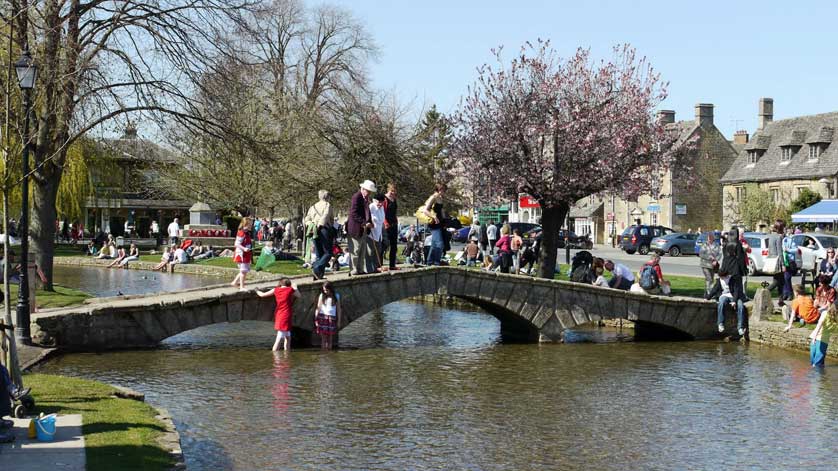
Bourton-on-the-Water is a very popular town in the Cotswolds and draws hordes of visitors to its beautifully crafted Model Village, the Bourton Model Railway, and the Dragonfly Maze.
Cheltenham abounds in elegant architecture with Regency terraces and swirling wrought-iron flourishes along Suffolk Square and Queen's Parade on Parabola Road.
Cheltenham also offers an absorbing art gallery and museum called The Wilson, named after Edward Wilson, who was born in the town and who died in 1912 on Scott's Antarctic expedition. The permanent collection includes a renowned exhibition on the Arts and Crafts movement.
The Cheltenham Festival in March is a highlight of the National Hunt horse racing calendar and brings visitors from all over the country.
Moreton-in-Marsh Hotels
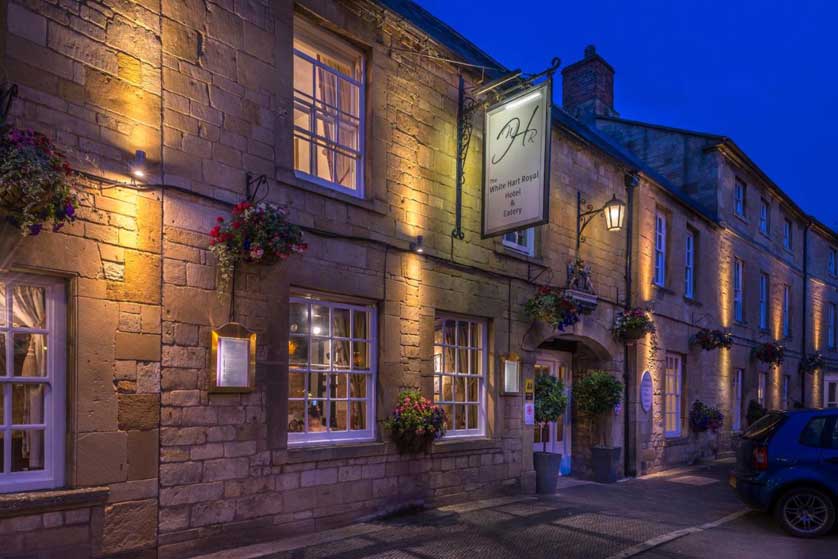
Places to stay include The White Hart Royal where Charles I was once a guest.
Also recommended are the Manor House Hotel and the Swan Inn in addition to the Bell Inn and Redesdale Arms mentioned above.
See here for a complete listing of places to stay in Moreton-in-Marsh.

Cotswolds Access - Getting To The Cotswolds
Moreton-in Marsh Station is operated by Great Western Railways (GWR). There is one service an hour to and from London Paddington Station.
There is also one service an hour to and from Worcester Shrub Hill and or Great Malvern.
The town is 23 miles northeast of Cirencester on the A429. From Bath drive north on the A433 and A429.
By Rail: All rail service from London to the Cotswolds departs from Paddington Station, which has its own London Underground station.
To travel to the Cotswolds from London by train takes about 1 ½ hours and trains run every hour, 7 days a week. Although rail services do not cover the whole of the Cotswolds, it is possible to travel to and from Bath, Cheltenham, Stratford, Chippenham, Gloucester, Kemble, Moreton-in-Marsh Station, Kingham and Oxford.
By Car: Driving from London to the Cotswolds takes about 2 hours and utilizes well sign-posted major roads. The M4 motorway provides easy access to Bath, Castle Combe and the South Cotswolds. The M40 motorway provides access to Oxford and Stratford and the North Cotswolds.
By Coach: National Express offers coach service to the Cotswolds. The main route to the Cotswolds from London starts at Victoria Coach Station and takes about 3 - 4 hours. Coaches run regularly from London to the Cotswolds, although there is no service on Sundays. The main coach stops in and around the Cotswolds are at Bath, Bourton-on-the-Water, Cheltenham, Chippenham, Gloucester, Moreton-in-Marsh, Northleach, Oxford, Stow-on-the-Wold, Stratford-upon-Avon, Stroud.
Cotswolds Maps
Hotels in the UK
Book Hotels in England - Booking.com
Find Accommodation in London - Booking.com
Search Hotels in Scotland - Booking.com
Hotels in Northern Ireland - Booking.com