Bibury Guide
Britain's Prettiest Village - Bibury
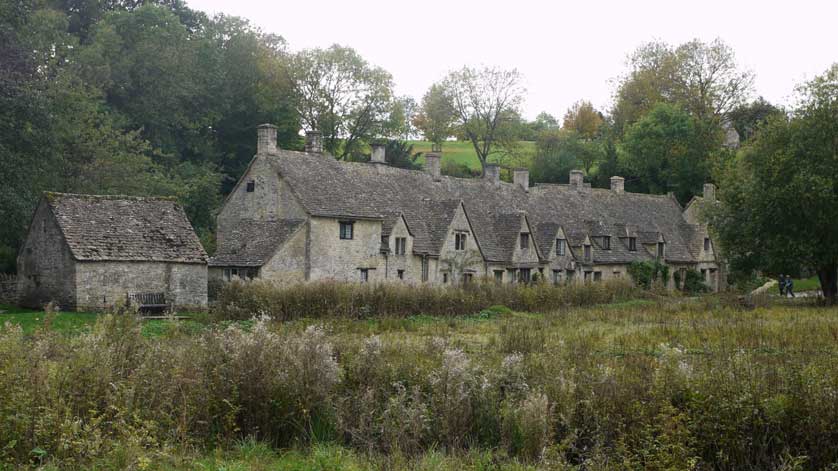
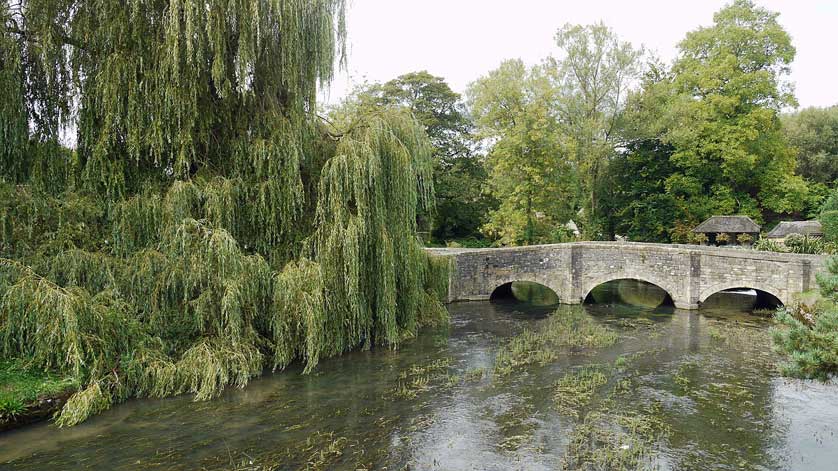
The picturesque village of Bibury in Gloucestershire in the Cotswolds lies on the pristine River Coln, a tributary of The Thames. Artist and craftsman William Morris (1834-96) once called Bibury "the most beautiful village in England." Over a century later in 2023 a recent survey confirmed just that.
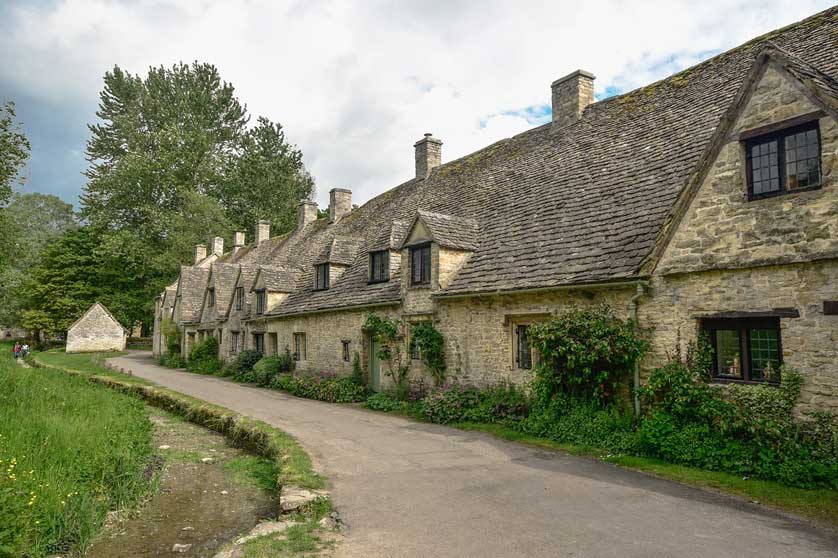
The charming 14th century weavers' cottages of Arlington Row are now the main source of the village's popularity with visitors.
The village is part of the Cotswolds Area of Outstanding Natural Beauty (AONB), which helps protect its natural and architectural heritage including its lovely Cotswold stone walls and buildings.

Bibury History
The area around Bibury was settled during Roman and Saxon times. The parish is mentioned in the Domesday Book (1086).
The lands and St. Mary's Church in Bibury were held by St. Mary's Priory in Worcester and later the the Abbey of Osney, near Oxford until its dissolution during the reign of King Henry VIII.
Nowadays, the village has a population of around 580 inhabitants.
Burford Attractions
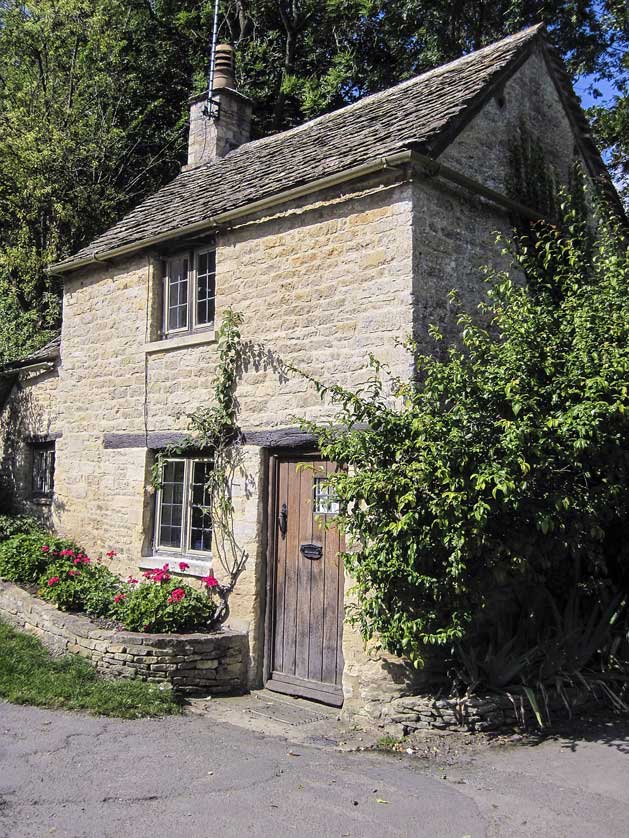
Bibury features a row of 17th-century picturesque, stone cottages called 'Arlington Row' which once housed weavers who supplied cloth to the local Arlington Mill. The first cottages were built around 1380 as a monastic wool store and converted in the 17th century to weavers' cottages.
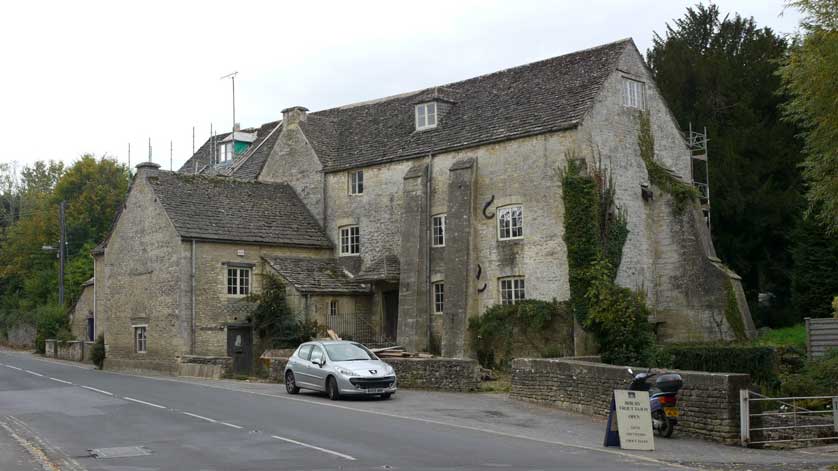
The Arlington Mill in Bibury once housed a folk and agricultural museum which had a room dedicated to William Morris (1834-1896), the British artist and conservationist. It is now a private residence.
Also back in private hands is Bibury Court that was once a hotel between 1968 and 2015. It is a Grade I listed Jacobean country house built in Cotswold stone between 1560 and 1599. The over 700 acres of the estate include a 17th century mill, an 18th century dovecote and stables.
Churches
St Mary's Church dates from the 11th century and is a Grade I listed building. The village has had a church since the Saxon period. The limestone and slate church was restored in the 19th century by the prolific architect Sir George Gilbert Scott. Scott was the man behind such grand buildings as The Albert Memorial and the Midland Grand Hotel at St Pancras Station in London. The church is noted for its impressive Norman-era font and stained glass windows. A Saxon stone grave slab set into the north wall tells of the church's long history.
Arlington Baptist Church is on The Green. It dates originally from 1747, and was rebuilt in 1833. It is a classic example of a traditional Baptist meeting house.

Chedworth Roman Villa
Just 20 minutes by car from Bibury is Chedworth Roman Villa, one of Britain's largest Romano-British villas. This 4th-century villa was built on the site of a natural spring overlooking the valley of the River Coln. Today, the Roman villa is operated by the National Trust. The highlight of any visit to Chedworth Roman Villa is viewing the well-preserved mosaics. The villa also had under-floor central heating, bathhouses, a latrine, and a water shrine (nymphaeum).


Shopping
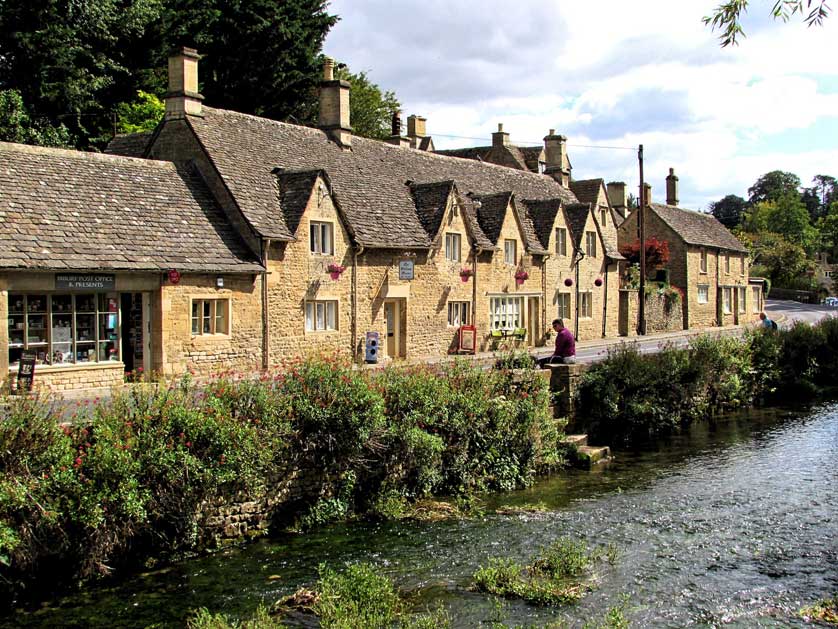
Bibury's shops include the Bibury Antiques Fair held in the Village Hall selling selling antiques and vintage items. Bibury Trout Farm gift shop sells a range of gifts and souvenirs as well as wines, spirits, some groceries, newspapers and magazines, and, of course fish (delicious fresh and smoked trout).
Pubs & Restaurants
Billed as Bibury's only pub, The Catherine Wheel has an extensive food and wine menu and also offers four en-suite, double rooms; two standard double rooms and two larger double rooms.
The Twig is a recommended pizza restaurant on the main road (B4425) through the village.
Around Bibury
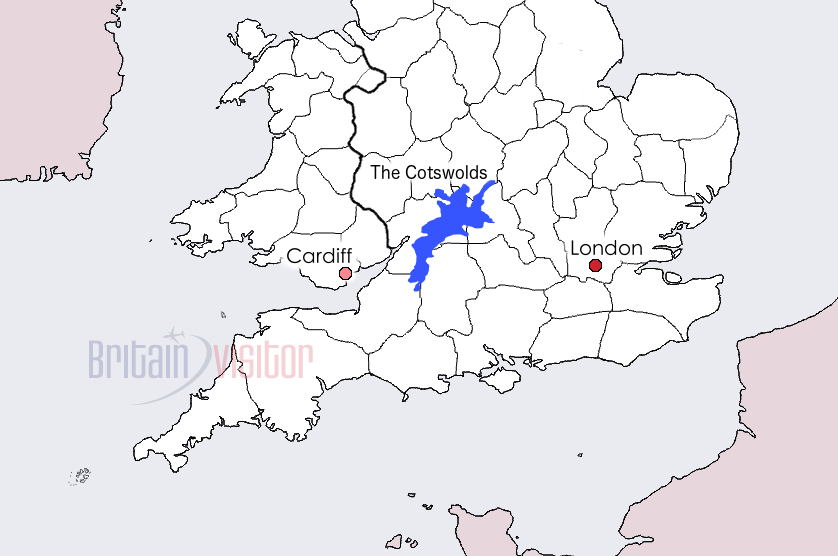
The Cotswolds is around 40 km across and 145 km long. The Cotswolds stretches from Stratford-upon-Avon to Bath.
Located eight miles north of Cheltenham, Sudeley Castle is a honey-colored stone edifice complete with banqueting hall. It was once owned by Katherine Parr, the last wife of Henry VIII.
Typical Cotswold towns include Chipping Norton, Moreton-in-Marsh and Stow-on-the-Wold. One Cotswold town, Chipping Campden, is well-known for being the home of the Arts and Crafts movement, founded by William Morris at the end of the 19th century.
Four miles from Chipping Campden lies Hidcote Manor. It features one of the most inventive gardens of the 20th century.
The Slaughters are another Cotswold treat. The visitor should take the easy, mile-long stroll between the twin villages of Upper and Lower Slaughter. The path runs beside the River Eye past scenic cottages and around an old flour mill, now converted into a tea and craft shop and a museum. By the way, the name "Slaughter" has nothing to do with meat production but rather derives from the Anglo Saxon word for mud.
Lacock has featured atmospherically in numerous films, from Harry Potter to Cranford and Pride and Prejudice. Visitors shouldn't miss Lacock Abbey, a medieval dwelling turned country house that also celebrates the work of its former resident, Henry Fox Talbot, who invented the photographic negative.
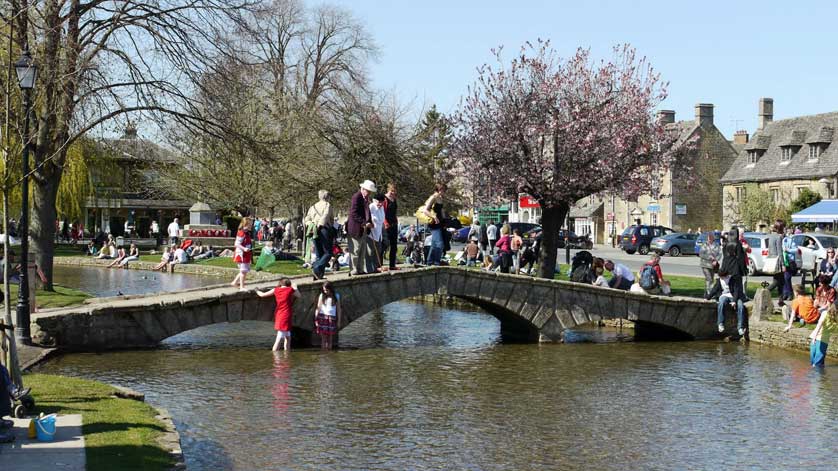
Bourton-on-the-Water is a very popular town in the Cotswolds and draws hordes of visitors to its beautifully crafted Model Village, the Bourton Model Railway, and the Dragonfly Maze.
Cheltenham abounds in elegant architecture with Regency terraces and swirling wrought-iron flourishes along Suffolk Square and Queen's Parade on Parabola Road.
Cheltenham also offers an absorbing art gallery and museum called The Wilson, named after Edward Wilson, who was born in the town and who died in 1912 on Scott's Antarctic expedition. The permanent collection includes a renowned exhibition on the Arts and Crafts movement.
The Cheltenham Festival in March is a highlight of the National Hunt horse racing calendar and brings visitors from all over the country.
Accommodation in Bibury
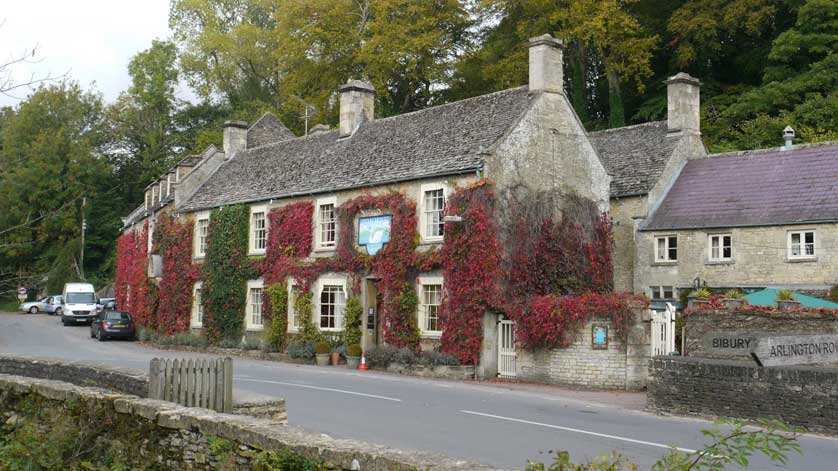
The ivy-clad Swan Hotel is a 17th-century former coaching inn that offers private trout fishing on the River Coln. The Swan Hotel offers 22 cozily-furnished rooms and a noted restaurant serving locally sourced food with a seasonal twist.
Cotteswold House, Cotswolds Riverside Cottage and Rosebank Barn are all recommended cottages or holiday homes to stay.
See here for a complete listing of places to stay in Bibury.
Cotswolds Access - Getting To The Cotswolds
Bibury is located about 6.5 miles northeast of Cirencester on the B4425. The village is also a short drive from Stroud, Gloucester, Malmesbury, Swindon, and slightly further from Bath. The 855 bus presently operated by Pulhams runs from Moreton-in-Marsh to Cirencester Monday to Saturday via Stow-on-the-Wold, Bourton-on-the-Water, Northleach and Bibury. There is no service on Sundays or public holidays.
By Rail: All rail service from London to the Cotswolds departs from Paddington Station, which has its own London Underground station.
To travel to the Cotswolds from London by train takes about 1 ½ hours and trains run every hour, 7 days a week. Although rail services do not cover the whole of the Cotswolds, it is possible to travel to and from Bath, Cheltenham, Stratford, Chippenham, Gloucester, Kemble, Moreton-in-Marsh Station, Kingham and Oxford.
By Car: Driving from London to the Cotswolds takes about 2 hours and utilizes well sign-posted major roads. The M4 motorway provides easy access to Bath, Castle Combe and the South Cotswolds. The M40 motorway provides access to Oxford and Stratford and the North Cotswolds.
By Coach: National Express offers coach service to the Cotswolds. The main route to the Cotswolds from London starts at Victoria Coach Station and takes about 3 - 4 hours. Coaches run regularly from London to the Cotswolds, although there is no service on Sundays. The main coach stops in and around the Cotswolds are at Bath, Bourton-on-the-Water, Cheltenham, Chippenham, Gloucester, Moreton-in-Marsh, Northleach, Oxford, Stow-on-the-Wold, Stratford-upon-Avon, Stroud.
Cotswolds Maps
Hotels in the UK
Book Hotels in England - Booking.com
Find Accommodation in London - Booking.com
Search Hotels in Scotland - Booking.com
Hotels in Northern Ireland - Booking.com